
The Global Rise of Overweight and Obesity, 1990-2025
DecembeR
Highlight
Key Insights
– Approximately 43 % of adults are classified as overweight, while 16 % meet the criteria for obesity.
– Among children and adolescents (5–19 years), obesity rates have increased more than fourfold, reaching an estimated 8 % globally and signalling an early-life health crisis.
– More than one billion people are living with obesity, including hundreds of millions of young people, with numbers projected to continue climbing without systemic intervention.
– The fastest growth is observed in low- and middle-income countries, where rapid urbanization, shifting diets, and declining physical activity have created a dual burden of undernutrition and excess weight.
– Physical inactivity and poor dietary patterns remain the primary behavioral drivers of these trends, contributing to an estimated five million preventable deaths every year.
Key Insights
– Approximately 43 % of adults are classified as overweight, while 16 % meet the criteria for obesity.
– Among children and adolescents (5–19 years), obesity rates have increased more than fourfold, reaching an estimated 8 % globally and signalling an early-life health crisis.
– More than one billion people are living with obesity, including hundreds of millions of young people, with numbers projected to continue climbing without systemic intervention.
– The fastest growth is observed in low- and middle-income countries, where rapid urbanization, shifting diets, and declining physical activity have created a dual burden of undernutrition and excess weight.
– Physical inactivity and poor dietary patterns remain the primary behavioral drivers of these trends, contributing to an estimated five million preventable deaths every year.
>2.5 billion
overweight
>1 billion
obese
>2.5 billion
overweight
>1 billion
obese
43 % affected
worldwide
8–9 % of deaths
annually due
to overweigtht
and obesity
5 million deaths
annually
8–9 % deaths
globally due to
overweigtht
and obesity
1. Understanding the Issue
Classification of Overweight and Obesity
The World Health Organization (WHO) defines overweight as a body mass index (BMI) of 25 (kg/m²) or higher, and obesity as a BMI of 30 or higher in adults. For children and adolescents aged 5–19, overweight and obesity are determined by BMI-for-age growth references:
– Overweight: BMI-for-age greater than +1 standard deviation
– Obesity: BMI-for-age greater than +2 standard deviations
While BMI is a simple and widely used measure, it is an imperfect indicator of health. It does not distinguish between fat and muscle mass or account for differences in body composition. Nevertheless, at the population level, BMI remains a reliable proxy for health risk and a key global monitoring indicator.
Understanding (1.)
The World Health Organization (WHO) defines overweight as a body mass index (BMI) of 25 (kg/m²) or higher, and obesity as a BMI of 30 or higher in adults. For children and adolescents aged 5–19, overweight and obesity are determined by BMI-for-age growth references:
– Overweight: BMI-for-age greater than +1 standard deviation
– Obesity: BMI-for-age greater than +2 standard deviations
While BMI is a simple and widely used measure, it is an imperfect indicator of health. It does not distinguish between fat and muscle mass or account for differences in body composition. Nevertheless, at the population level, BMI remains a reliable proxy for health risk and a key global monitoring indicator.
Understanding the Issue
Defining "Overweight" and "Obesity"
The World Health Organization (WHO) defines overweight as a body mass index (BMI) of 25 (kg/m²) or higher, and obesity as a BMI of 30 or higher in adults. For children and adolescents aged 5–19, overweight and obesity are determined by BMI-for-age growth references:
– Overweight: BMI-for-age greater than +1 standard deviation
– Obesity: BMI-for-age greater than +2 standard deviations
While BMI is a simple and widely used measure, it is an imperfect indicator of health. It does not distinguish between fat and muscle mass or account for differences in body composition. Nevertheless, at the population level, BMI remains a reliable proxy for health risk and a key global monitoring indicator.
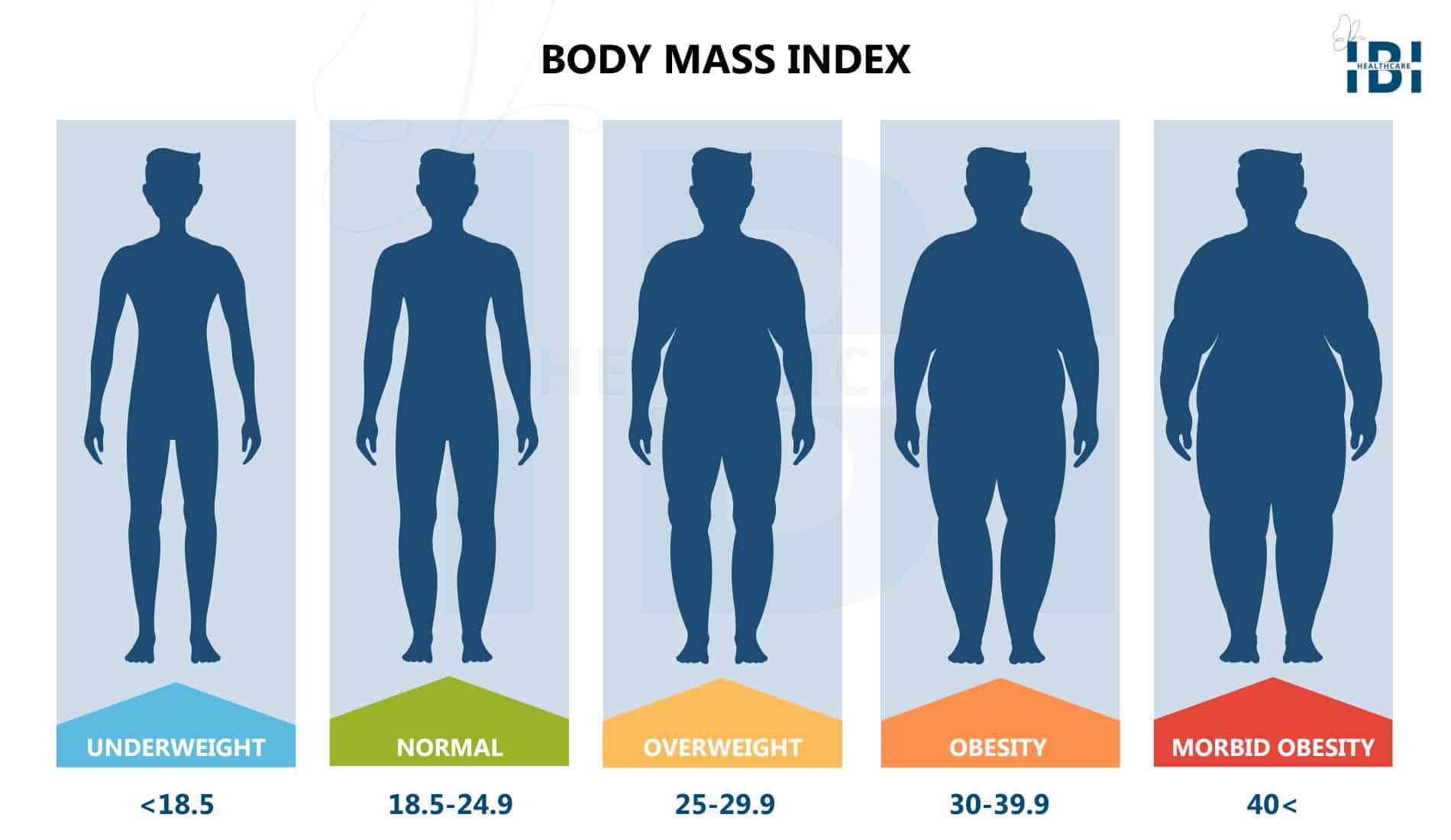
Image source: IBI Healthcare Institute, “Morbid Obesity: What BMI Really Reveals?”, IBIHealthcare.com, Nov 11 2022.
Image source: IBI Healthcare Institute, “Morbid Obesity: What BMI Really Reveals?”, IBIHealthcare.com, Nov 11 2022.
2. The Global Shift Since 1990
In 1990, obesity was considered primarily a challenge for industrialized nations. Today, it is a global phenomenon that affects people across every region, income level, and culture.
According to the WHO and the NCD Risk Factor Collaboration (NCD-RisC):
– The share of adults classified as overweight (BMI ≥25) rose from 25 percent in 1990 to about 43 percent in 2022.
– Obesity (BMI ≥30) more than doubled, from roughly 7 percent to 16 percent over the same period.
– Among children and adolescents (ages 5–19), the combined rate of obesity increased more than fourfold, reaching 8.2 percent globally in 2022.
Regional differences are striking. While obesity rates in some high-income countries have plateaued, they continue to rise rapidly across Asia, the Middle East, Latin America, and Africa. In parts of the Pacific Islands, more than 50 percent of adults live with obesity.
The Global Shift Since 1990 (2.)
In 1990, obesity was considered primarily a challenge for industrialized nations. Today, it is a global phenomenon that affects people across every region, income level, and culture.
According to the WHO and the NCD Risk Factor Collaboration (NCD-RisC):
– The share of adults classified as overweight (BMI ≥25) rose from 25 percent in 1990 to about 43 percent in 2022.
– Obesity (BMI ≥30) more than doubled, from roughly 7 percent to 16 percent over the same period.
– Among children and adolescents (ages 5–19), the combined rate of obesity increased more than fourfold, reaching 8.2 percent globally in 2022.
Regional differences are striking. While obesity rates in some high-income countries have plateaued, they continue to rise rapidly across Asia, the Middle East, Latin America, and Africa. In parts of the Pacific Islands, more than 50 percent of adults live with obesity.
2. The Global Shift Since 1990
In 1990, obesity was considered primarily a challenge for industrialized nations. Today, it is a global phenomenon that affects people across every region, income level, and culture.
According to the WHO and the NCD Risk Factor Collaboration (NCD-RisC):
– The share of adults classified as overweight (BMI ≥25) rose from 25 percent in 1990 to about 43 percent in 2022.
– Obesity (BMI ≥30) more than doubled, from roughly 7 percent to 16 percent over the same period.
– Among children and adolescents (ages 5–19), the combined rate of obesity increased more than fourfold, reaching 8.2 percent globally in 2022.
Regional differences are striking. While obesity rates in some high-income countries have plateaued, they continue to rise rapidly across Asia, the Middle East, Latin America, and Africa. In parts of the Pacific Islands, more than 50 percent of adults live with obesity.
Explore for Yourself
3. Why Is This Happening?
The global rise in overweight and obesity cannot be explained by individual choices alone. It reflects deep structural and cultural transformations in how societies produce food, design environments, structure work, and define well-being. What was once a rare condition of affluence has become a global norm, driven by powerful and interconnected forces shaping modern life.
a) Changes in Food Environments
Over the past three decades, food systems have undergone a profound transformation. The globalization and industrial transformation of food production and trade have dramatically expanded the reach of ultra-processed, energy-dense foods, making them increasingly tastier, more convenient, cheaper, and more accessible than fresh or minimally processed options. The relative price of fruits and vegetables and whole grains has risen in many low- and middle-income countries, while calorie-dense snacks and sweetened beverages have become ubiquitous.
Aggressive marketing and branding, especially toward children and adolescents, further distort dietary choices. Studies show that exposure to advertising for sugary and high-fat foods increases consumption independent of hunger cues. Meanwhile, portion sizes have expanded dramatically, and modern packaging and convenience formats encourage grazing and overconsumption.
In parallel, global food supply chains have lengthened, prioritizing shelf-stability and profit margins over nutrient quality. The result is a nutritional landscape that promotes overconsumption of poor-quality calories while leaving many populations simultaneously undernourished in essential vitamins and minerals.
b) Physical Inactivity and Sedentary Living
Modern society has engineered physical activity out of daily life. Workplaces, schools, transport systems, and entertainment are increasingly screen-based and sedentary. In most urban areas, commuting is car-dependent, occupational energy expenditure has fallen sharply, and leisure time is dominated by digital devices.
According to the WHO, 31 % of adults and over 80 % of adolescents fail to meet minimum recommended activity levels. Physical inactivity is estimated to cause up to 5 million preventable deaths annually, a toll comparable to that of tobacco use.
This decline is compounded by technological and occupational shifts: automation has reduced manual labor, remote work has confined millions to home environments, and screen-based leisure has replaced physically active recreation. Sleep deprivation, stress, and long work hours further reduce motivation and opportunity for movement.
c) Built Environments and Urbanization
The design of modern cities powerfully shapes health behavior. Many urban environments lack safe, accessible, and aesthetically appealing spaces for walking, cycling, or active recreation. In rapidly expanding cities, infrastructure often prioritizes cars over pedestrians, reducing incidental physical activity.
Urban sprawl, pollution, and unsafe traffic conditions discourage outdoor activity, particularly for women, children, and older adults. Public parks and green spaces (often key determinants of population activity levels) are either inadequate or unequally distributed. In high-density areas, concerns about crime, air quality, and overcrowding further limit opportunities for outdoor exercise.
In short, urbanization without health-centered design has made sedentary behavior the default mode of living for billions.
d) Socioeconomic Inequality
Obesity is increasingly a marker of inequality. In both developed and developing contexts, low income, low education, and social disadvantage correlate strongly with higher obesity prevalence. Healthy diets and active lifestyles often demand resources (time, money, safety, and space) that many households lack.
In low-income settings, nutritious foods can cost four to five times more than calorie-dense processed alternatives. Limited access to supermarkets and cooking facilities further narrows options. For many families, energy-dense foods provide the only affordable way to avoid hunger, even if they compromise long-term health.
Moreover, economic insecurity and chronic stress alter hormonal regulation and appetite, promoting weight gain. In wealthier nations, obesogenic environments cluster in deprived neighborhoods, where fast-food density is high and opportunities for recreation are scarce.
e) Cultural and Behavioral Shifts
In many societies, excess weight continues to carry connotations of prosperity or attractiveness, while in others it has become normalized through rising prevalence and changing social expectations. The global spread of westernized consumption patterns, including fast food, snacking, and portion inflation, has transformed traditional diets and eating behaviors across nearly every cultural context.
In many cultures, professional success and constant availability have become central markers of achievement, leaving little time or value placed on movement or recreation. At the same time, digitalization and screen-based entertainment have replaced social and outdoor activities with sedentary, individual pursuits while marketing strategies and social media imagery continue to blur the line between aspiration and excess, influencing perceptions of what constitutes a “normal” or desirable body.
Emotional and psychological factors further reinforce these trends. Rising stress levels, insufficient sleep, and widespread mental health challenges have increased rates of emotional and stress-related eating, often involving highly processed comfort foods that disrupt metabolic regulation. Disrupted circadian rhythms caused by irregular sleep and meal timing further affect appetite and insulin sensitivity. In parallel, increasing loneliness and the erosion of community ties have reduced opportunities for collective forms of recreation, undermining motivation to be active.
Furthermore, families and communities engage less in shared physical activity or traditional cooking, increasing dependence on convenience foods and takeaway meals. Urban lifestyles often prioritize efficiency and productivity over well-being.
f) Modern Work
The modern economy has restructured labor and leisure in ways that make healthy living more difficult to sustain. Across income levels, long working hours, job insecurity, and constant digital connectivity have eroded opportunities for rest, recreation, and meal preparation. The rise of shift work, remote employment, and gig economies has blurred the boundaries between work and home life, promoting risk factors for weight gain and metabolic disease, such as irregular eating schedules, chronic stress, and disrupted sleep.
In pursuing efficiency and comfort, modern societies have created systems that normalize inactivity and excess, embedding overweight and obesity into the rhythms of daily life. To reverse this trajectory, we must rethink what progress means and build environments where health and movement are at the center of human living.
Why is this happening? (3.)
The global rise in overweight and obesity cannot be explained by individual choices alone. It reflects deep structural and cultural transformations in how societies produce food, design environments, structure work, and define well-being. What was once a rare condition of affluence has become a global norm, driven by powerful and interconnected forces shaping modern life.
a) Changes in Food Environments
Over the past three decades, food systems have undergone a profound transformation. The globalization and industrial transformation of food production and trade have dramatically expanded the reach of ultra-processed, energy-dense foods, making them increasingly tastier, more convenient, cheaper, and more accessible than fresh or minimally processed options. The relative price of fruits and vegetables and whole grains has risen in many low- and middle-income countries, while calorie-dense snacks and sweetened beverages have become ubiquitous.
Aggressive marketing and branding, especially toward children and adolescents, further distort dietary choices. Studies show that exposure to advertising for sugary and high-fat foods increases consumption independent of hunger cues. Meanwhile, portion sizes have expanded dramatically, and modern packaging and convenience formats encourage grazing and overconsumption.
In parallel, global food supply chains have lengthened, prioritizing shelf-stability and profit margins over nutrient quality. The result is a nutritional landscape that promotes overconsumption of poor-quality calories while leaving many populations simultaneously undernourished in essential vitamins and minerals.
b) Physical Inactivity and Sedentary Living
Modern society has engineered physical activity out of daily life. Workplaces, schools, transport systems, and entertainment are increasingly screen-based and sedentary. In most urban areas, commuting is car-dependent, occupational energy expenditure has fallen sharply, and leisure time is dominated by digital devices.
According to the WHO, 31 % of adults and over 80 % of adolescents fail to meet minimum recommended activity levels. Physical inactivity is estimated to cause up to 5 million preventable deaths annually, a toll comparable to that of tobacco use.
This decline is compounded by technological and occupational shifts: automation has reduced manual labor, remote work has confined millions to home environments, and screen-based leisure has replaced physically active recreation. Sleep deprivation, stress, and long work hours further reduce motivation and opportunity for movement.
c) Built Environments and Urbanization
The design of modern cities powerfully shapes health behavior. Many urban environments lack safe, accessible, and aesthetically appealing spaces for walking, cycling, or active recreation. In rapidly expanding cities, infrastructure often prioritizes cars over pedestrians, reducing incidental physical activity.
Urban sprawl, pollution, and unsafe traffic conditions discourage outdoor activity, particularly for women, children, and older adults. Public parks and green spaces (often key determinants of population activity levels) are either inadequate or unequally distributed. In high-density areas, concerns about crime, air quality, and overcrowding further limit opportunities for outdoor exercise.
In short, urbanization without health-centered design has made sedentary behavior the default mode of living for billions.
d) Socioeconomic Inequality
Obesity is increasingly a marker of inequality. In both developed and developing contexts, low income, low education, and social disadvantage correlate strongly with higher obesity prevalence. Healthy diets and active lifestyles often demand resources (time, money, safety, and space) that many households lack.
In low-income settings, nutritious foods can cost four to five times more than calorie-dense processed alternatives. Limited access to supermarkets and cooking facilities further narrows options. For many families, energy-dense foods provide the only affordable way to avoid hunger, even if they compromise long-term health.
Moreover, economic insecurity and chronic stress alter hormonal regulation and appetite, promoting weight gain. In wealthier nations, obesogenic environments cluster in deprived neighborhoods, where fast-food density is high and opportunities for recreation are scarce.
e) Cultural and Behavioral Shifts
In many societies, excess weight continues to carry connotations of prosperity or attractiveness, while in others it has become normalized through rising prevalence and changing social expectations. The global spread of westernized consumption patterns, including fast food, snacking, and portion inflation, has transformed traditional diets and eating behaviors across nearly every cultural context.
In many cultures, professional success and constant availability have become central markers of achievement, leaving little time or value placed on movement or recreation. At the same time, digitalization and screen-based entertainment have replaced social and outdoor activities with sedentary, individual pursuits while marketing strategies and social media imagery continue to blur the line between aspiration and excess, influencing perceptions of what constitutes a “normal” or desirable body.
Emotional and psychological factors further reinforce these trends. Rising stress levels, insufficient sleep, and widespread mental health challenges have increased rates of emotional and stress-related eating, often involving highly processed comfort foods that disrupt metabolic regulation. Disrupted circadian rhythms caused by irregular sleep and meal timing further affect appetite and insulin sensitivity. In parallel, increasing loneliness and the erosion of community ties have reduced opportunities for collective forms of recreation, undermining motivation to be active.
Furthermore, families and communities engage less in shared physical activity or traditional cooking, increasing dependence on convenience foods and takeaway meals. Urban lifestyles often prioritize efficiency and productivity over well-being.
f) Modern Work
The modern economy has restructured labor and leisure in ways that make healthy living more difficult to sustain. Across income levels, long working hours, job insecurity, and constant digital connectivity have eroded opportunities for rest, recreation, and meal preparation. The rise of shift work, remote employment, and gig economies has blurred the boundaries between work and home life, promoting risk factors for weight gain and metabolic disease, such as irregular eating schedules, chronic stress, and disrupted sleep.
In pursuing efficiency and comfort, modern societies have created systems that normalize inactivity and excess, embedding overweight and obesity into the rhythms of daily life. To reverse this trajectory, we must rethink what progress means and build environments where health and movement are at the center of human living.
3. Why Is This Happening?
The global rise in overweight and obesity cannot be explained by individual choices alone. It reflects deep structural and cultural transformations in how societies produce food, design environments, structure work, and define well-being. What was once a rare condition of affluence has become a global norm, driven by powerful and interconnected forces shaping modern life.
a) Changes in Food Environments
Over the past three decades, food systems have undergone a profound transformation. The globalization and industrial transformation of food production and trade have dramatically expanded the reach of ultra-processed, energy-dense foods, making them increasingly tastier, more convenient, cheaper, and more accessible than fresh or minimally processed options. The relative price of fruits and vegetables and whole grains has risen in many low- and middle-income countries, while calorie-dense snacks and sweetened beverages have become ubiquitous.
Aggressive marketing and branding, especially toward children and adolescents, further distort dietary choices. Studies show that exposure to advertising for sugary and high-fat foods increases consumption independent of hunger cues. Meanwhile, portion sizes have expanded dramatically, and modern packaging and convenience formats encourage grazing and overconsumption.
In parallel, global food supply chains have lengthened, prioritizing shelf-stability and profit margins over nutrient quality. The result is a nutritional landscape that promotes overconsumption of poor-quality calories while leaving many populations simultaneously undernourished in essential vitamins and minerals.
b) Physical Inactivity and Sedentary Living
Modern society has engineered physical activity out of daily life. Workplaces, schools, transport systems, and entertainment are increasingly screen-based and sedentary. In most urban areas, commuting is car-dependent, occupational energy expenditure has fallen sharply, and leisure time is dominated by digital devices.
According to the WHO, 31 % of adults and over 80 % of adolescents fail to meet minimum recommended activity levels. Physical inactivity is estimated to cause up to 5 million preventable deaths annually, a toll comparable to that of tobacco use.
This decline is compounded by technological and occupational shifts: automation has reduced manual labor, remote work has confined millions to home environments, and screen-based leisure has replaced physically active recreation. Sleep deprivation, stress, and long work hours further reduce motivation and opportunity for movement.
c) Built Environments and Urbanization
The design of modern cities powerfully shapes health behavior. Many urban environments lack safe, accessible, and aesthetically appealing spaces for walking, cycling, or active recreation. In rapidly expanding cities, infrastructure often prioritizes cars over pedestrians, reducing incidental physical activity.
Urban sprawl, pollution, and unsafe traffic conditions discourage outdoor activity, particularly for women, children, and older adults. Public parks and green spaces (often key determinants of population activity levels) are either inadequate or unequally distributed. In high-density areas, concerns about crime, air quality, and overcrowding further limit opportunities for outdoor exercise.
In short, urbanization without health-centered design has made sedentary behavior the default mode of living for billions.
d) Socioeconomic Inequality
Obesity is increasingly a marker of inequality. In both developed and developing contexts, low income, low education, and social disadvantage correlate strongly with higher obesity prevalence. Healthy diets and active lifestyles often demand resources (time, money, safety, and space) that many households lack.
In low-income settings, nutritious foods can cost four to five times more than calorie-dense processed alternatives. Limited access to supermarkets and cooking facilities further narrows options. For many families, energy-dense foods provide the only affordable way to avoid hunger, even if they compromise long-term health.
Moreover, economic insecurity and chronic stress alter hormonal regulation and appetite, promoting weight gain. In wealthier nations, obesogenic environments cluster in deprived neighborhoods, where fast-food density is high and opportunities for recreation are scarce.
e) Cultural and Behavioral Shifts
In many societies, excess weight continues to carry connotations of prosperity or attractiveness, while in others it has become normalized through rising prevalence and changing social expectations. The global spread of westernized consumption patterns, including fast food, snacking, and portion inflation, has transformed traditional diets and eating behaviors across nearly every cultural context.
In many cultures, professional success and constant availability have become central markers of achievement, leaving little time or value placed on movement or recreation. At the same time, digitalization and screen-based entertainment have replaced social and outdoor activities with sedentary, individual pursuits while marketing strategies and social media imagery continue to blur the line between aspiration and excess, influencing perceptions of what constitutes a “normal” or desirable body.
Emotional and psychological factors further reinforce these trends. Rising stress levels, insufficient sleep, and widespread mental health challenges have increased rates of emotional and stress-related eating, often involving highly processed comfort foods that disrupt metabolic regulation. Disrupted circadian rhythms caused by irregular sleep and meal timing further affect appetite and insulin sensitivity. In parallel, increasing loneliness and the erosion of community ties have reduced opportunities for collective forms of recreation, undermining motivation to be active.
Furthermore, families and communities engage less in shared physical activity or traditional cooking, increasing dependence on convenience foods and takeaway meals. Urban lifestyles often prioritize efficiency and productivity over well-being.
f) Modern Work
The modern economy has restructured labor and leisure in ways that make healthy living more difficult to sustain. Across income levels, long working hours, job insecurity, and constant digital connectivity have eroded opportunities for rest, recreation, and meal preparation. The rise of shift work, remote employment, and gig economies has blurred the boundaries between work and home life, promoting risk factors for weight gain and metabolic disease, such as irregular eating schedules, chronic stress, and disrupted sleep.
In pursuing efficiency and comfort, modern societies have created systems that normalize inactivity and excess, embedding overweight and obesity into the rhythms of daily life. To reverse this trajectory, we must rethink what progress means and build environments where health and movement are at the center of human living.
4. The Health and Economic Consequences
Overweight and obesity are major risk factors for noncommunicable diseases (NCDs) including type 2 diabetes, cardiovascular disease, stroke, and certain cancers. They are also linked to musculoskeletal disorders and mental health challenges such as depression and low self-esteem.
Health Burden
Overweight and obesity represent one of the largest preventable burdens on global health. According to the WHO, a high BMI is now responsible for roughly 8–9 % of all global deaths annualy, with rates as high as 15% in many developing countries.
Overweight and obesity account for an estimated five million preventable deaths every year, driven largely by their role in non-communicable diseases such as cardiovascular illness, diabetes, and certain cancers. Around 31 % of adults worldwide do not meet recommended activity levels, and over 45 % live with excess body weight, intensifying the health and economic consequences.
The burden is increasingly shifting toward LMCI, where rapid urbanization, changing diets, and sedentary work patterns have created a dual challenge of undernutrition and overweight. Without coordinated action to promote active, healthy living, this epidemic will continue to strain healthcare systems and shorten healthy life expectancy across all regions.
The Health and Economic Consequences (4.)
Overweight and obesity are major risk factors for noncommunicable diseases (NCDs) including type 2 diabetes, cardiovascular disease, stroke, and certain cancers. They are also linked to musculoskeletal disorders and mental health challenges such as depression and low self-esteem.
Health Burdern
Overweight and obesity represent one of the largest preventable burdens on global health. According to the WHO, a high BMI is now responsible for roughly 8–9 % of all global deaths annualy, with rates as high as 15% in many developing countries.
They account for an estimated five million preventable deaths every year, driven largely by their role in non-communicable diseases such as cardiovascular illness, diabetes, and certain cancers. Around 31 % of adults worldwide do not meet recommended activity levels, and over 45 % live with excess body weight, intensifying the health and economic consequences.
The burden is increasingly shifting toward LMCI, where rapid urbanization, changing diets, and sedentary work patterns have created a dual challenge of undernutrition and overweight. Without coordinated action to promote active, healthy living, this epidemic will continue to strain healthcare systems and shorten healthy life expectancy across all regions.
4. The Health and Economic Consequences
Overweight and obesity are major risk factors for noncommunicable diseases (NCDs) including type 2 diabetes, cardiovascular disease, stroke, and certain cancers. They are also linked to musculoskeletal disorders and mental health challenges such as depression and low self-esteem.
Health Burden
Overweight and obesity represent one of the largest preventable burdens on global health. According to the WHO, a high BMI is now responsible for roughly 8–9 % of all global deaths annualy, with rates as high as 15% in many developing countries.
Overweight and obesity account for an estimated five million preventable deaths every year, driven largely by their role in non-communicable diseases such as cardiovascular illness, diabetes, and certain cancers. Around 31 % of adults worldwide do not meet recommended activity levels, and over 45 % live with excess body weight, intensifying the health and economic consequences.
The burden is increasingly shifting toward LMCI, where rapid urbanization, changing diets, and sedentary work patterns have created a dual challenge of undernutrition and overweight. Without coordinated action to promote active, healthy living, this epidemic will continue to strain healthcare systems and shorten healthy life expectancy across all regions.
Explore for Yourself
Economic Burden
The economic costs are equally severe. Overweight and obesity now represent one of the largest preventable costs to global health and productivity. Despite rising government health spending as a share of GDP, overweight-related diseases continue to grow, signaling that higher spending alone hasn’t addressed root causes. In 2025, overweight and obesity are estimated to account for around 2–2.5 % of global GDP, equivalent to trillions of dollars in annual losses through healthcare expenditures, reduced productivity, and premature mortality. According to the World Obesity Federation, global costs are projected to surpass US$4 trillion by 2035 and exceed 3 % of world GDP by 2060 if current trends continue. Direct medical spending (covering hospital stays, outpatient visits, prescription medications, surgeries, cardiovascular disease, diabetes, musculoskeletal disorders, cancer treatments, etc.) accounts for roughly one-third of the total burden, while indirect costs such as absenteeism, presenteeism, and early death dominate the remainder. The impact is rising fastest in low- and middle-income countries.
Preventive strategies that promote physical activity and reduce excess weight offer a strong economic return, with even modest reductions in prevalence projected to save 5–10 % of future costs annually.
Economic Burdem
The economic costs are equally severe. Overweight and obesity now represent one of the largest preventable costs to global health and productivity. Despite rising government health spending as a share of GDP, overweight-related diseases continue to grow, signaling that higher spending alone hasn’t addressed root causes. In 2025, overweight and obesity are estimated to account for around 2–2.5 % of global GDP, equivalent to trillions of dollars in annual losses through healthcare expenditures, reduced productivity, and premature mortality. According to the World Obesity Federation, global costs are projected to surpass US$4 trillion by 2035 and exceed 3 % of world GDP by 2060 if current trends continue. Direct medical spending (covering hospital stays, outpatient visits, prescription medications, surgeries, cardiovascular disease, diabetes, musculoskeletal disorders, cancer treatments, etc.) accounts for roughly one-third of the total burden, while indirect costs such as absenteeism, presenteeism, and early death dominate the remainder. The impact is rising fastest in low- and middle-income countries.
Preventive strategies that promote physical activity and reduce excess weight offer a strong economic return, with even modest reductions in prevalence projected to save 5–10 % of future costs annually.
Economic Burden
The economic costs are equally severe. Overweight and obesity now represent one of the largest preventable costs to global health and productivity. Despite rising government health spending as a share of GDP, overweight-related diseases continue to grow, signaling that higher spending alone hasn’t addressed root causes. In 2025, overweight and obesity are estimated to account for around 2–2.5 % of global GDP, equivalent to trillions of dollars in annual losses through healthcare expenditures, reduced productivity, and premature mortality. According to the World Obesity Federation, global costs are projected to surpass US$4 trillion by 2035 and exceed 3 % of world GDP by 2060 if current trends continue. Direct medical spending (covering hospital stays, outpatient visits, prescription medications, surgeries, cardiovascular disease, diabetes, musculoskeletal disorders, cancer treatments, etc.) accounts for roughly one-third of the total burden, while indirect costs such as absenteeism, presenteeism, and early death dominate the remainder. The impact is rising fastest in low- and middle-income countries.
Preventive strategies that promote physical activity and reduce excess weight offer a strong economic return, with even modest reductions in prevalence projected to save 5–10 % of future costs annually.
Explore for Yourself
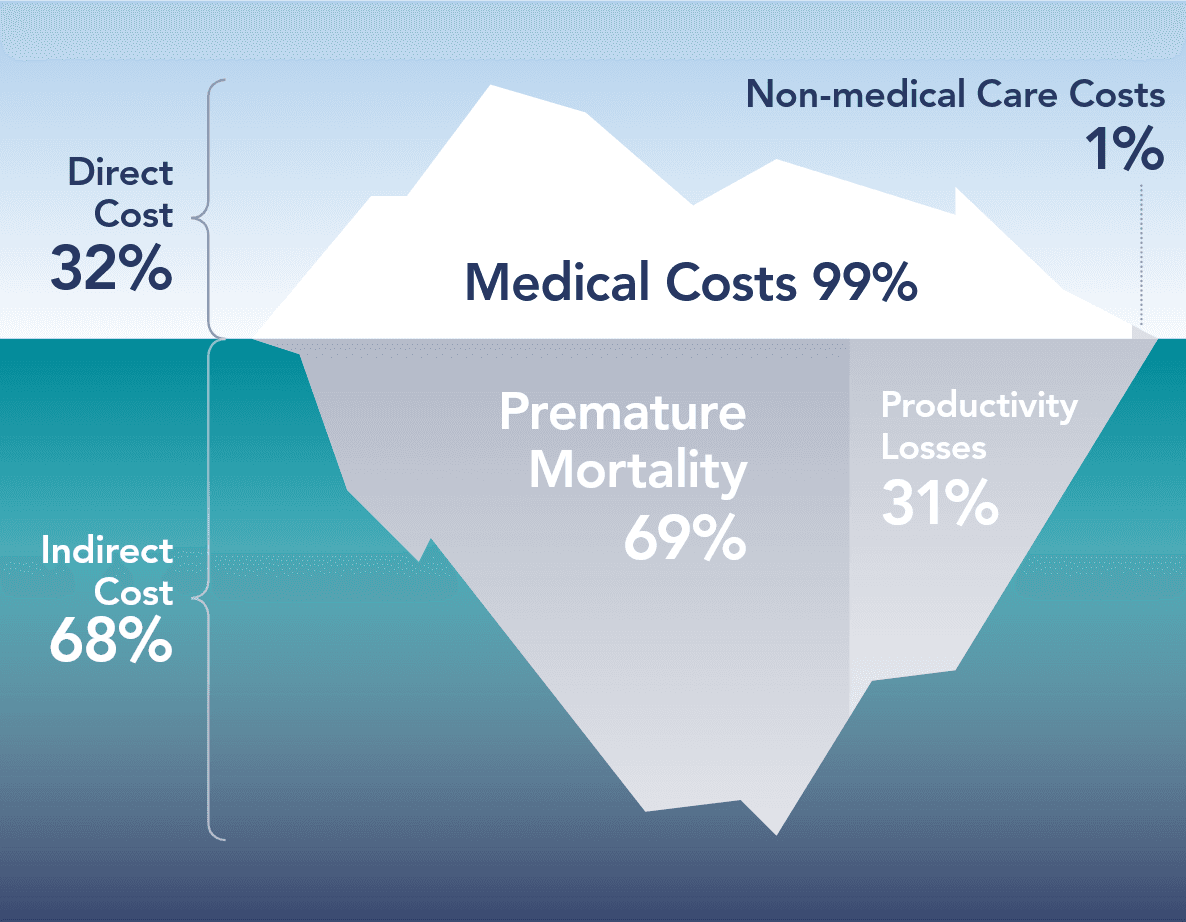
World Obesity Federation & RTI International (2022). The Economic Impact of Overweight & Obesity in 2020 and 2060 (2nd Edition). Figure 4: Breakdown of the economic costs of obesity (2019 data). Retrieved from data.worldobesity.org
5. The Role of Physical Activity
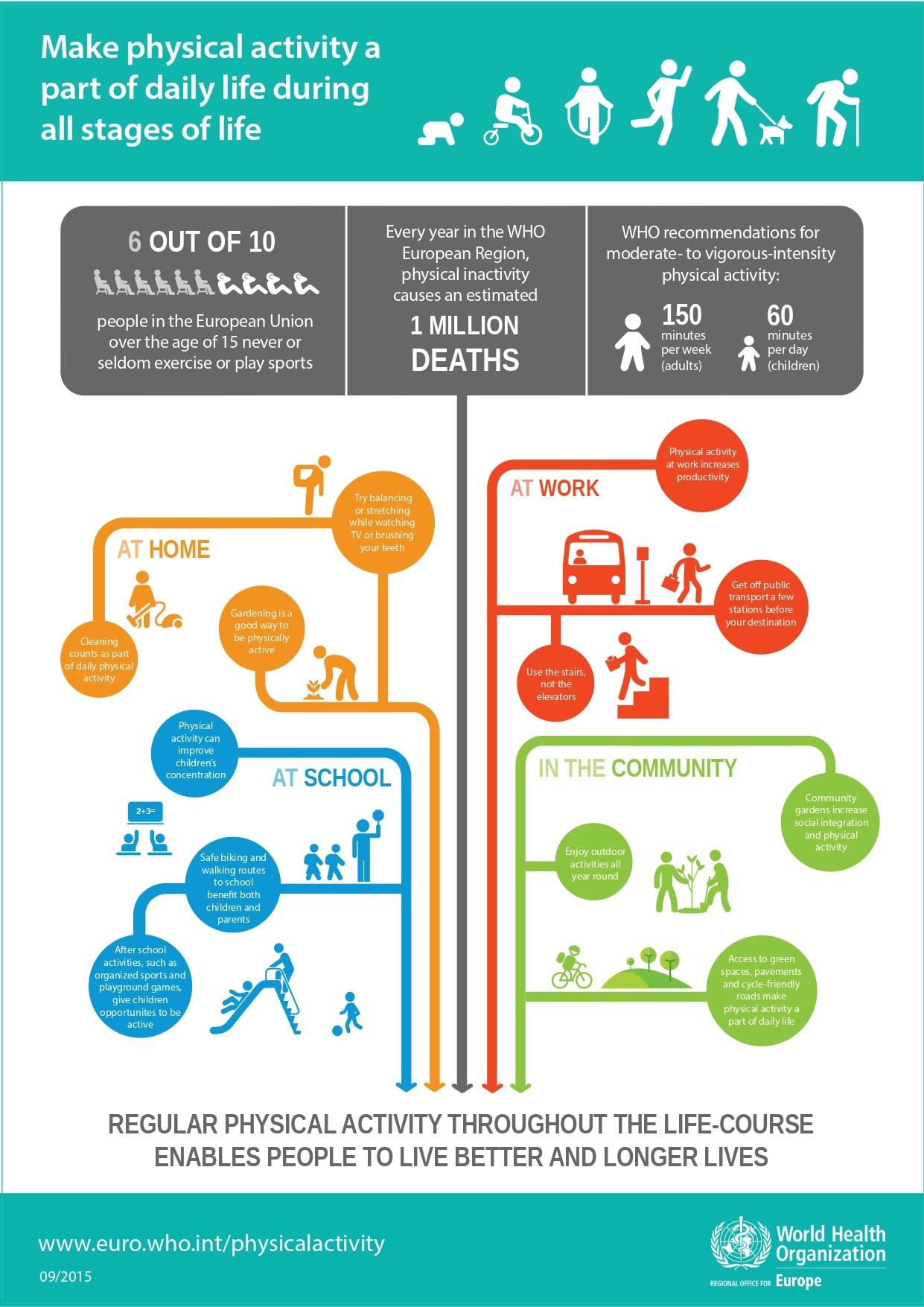
Physical activity is, alongside proper nutrition, the most powerful preventive tool for maintaining a healthy weight and metabolic balance. It improves cardiovascular function, enhances insulin sensitivity, reduces inflammation, and supports mental well-being.
The WHO’s global recommendations state that adults should engage in at least 150 minutes and children in at least 60 minutes of moderate- to vigorous-intensity physical activit each week. Meeting these levels can reduce the risk of depression by up to 30 percent and lower the likelihood of premature death by 20–30 percent.
Exercise and Weight Regulation
While diet determines energy intake, physical activity determines how efficiently the body burns and regulates energy. Consistent movement increases resting metabolic rate, preserves muscle mass, and improves hormonal regulation, all of which are key to long-term weight stability.
The Lifestyle Connection
The benefits of movement extend far beyond calorie expenditure.
– People who increase their physical activity often report improved sleep quality, nutritional habits, and emotional resilience.
– Regular exercise is frequently the gateway behavior to broader lifestyle change, displacing harmful habits such as smoking, excessive drinking, unhealthy diets, overeating, and so on.
The Role of Physical Activity (5.)
Physical activity is the most powerful preventive tool for maintaining a healthy weight and metabolic balance. It improves cardiovascular function, enhances insulin sensitivity, reduces inflammation, and supports mental well-being.
The WHO’s global recommendations state that adults should engage in at least 150 minutes and children in at least 60 minutes of moderate- to vigorous-intensity physical activit each week. Meeting these levels can reduce the risk of depression by up to 30 percent and lower the likelihood of premature death by 20–30 percent.
Exercise and Weight Regulation
While diet determines energy intake, physical activity determines how efficiently the body burns and regulates energy. Consistent movement increases resting metabolic rate, preserves muscle mass, and improves hormonal regulation, all of which are key to long-term weight stability.
The Lifestyle Connection
The benefits of movement extend far beyond calorie expenditure.
– People who increase their physical activity often report improved sleep quality, nutritional habits, and emotional resilience.
– Regular exercise is frequently the gateway behavior to broader lifestyle change, displacing harmful habits such as smoking, excessive drinking, unhealthy diets, overeating, and so on.
5. The Role of
Physical Activity
Physical activity is, alongside proper nutrition, the most powerful preventive tool for maintaining a healthy weight and metabolic balance. It improves cardiovascular function, enhances insulin sensitivity, reduces inflammation, and supports mental well-being.
The WHO’s global recommendations state that adults should engage in at least 150 minutes and children in at least 60 minutes of moderate- to vigorous-intensity physical activit each week. Meeting these levels can reduce the risk of depression by up to 30 percent and lower the likelihood of premature death by 20–30 percent.
Exercise and Weight Regulation
While diet determines energy intake, physical activity determines how efficiently the body burns and regulates energy. Consistent movement increases resting metabolic rate, preserves muscle mass, and improves hormonal regulation, all of which are key to long-term weight stability.
The Lifestyle Connection
The benefits of movement extend far beyond calorie expenditure.
– People who increase their physical activity often report improved sleep quality, nutritional habits, and emotional resilience.
– Regular exercise is frequently the gateway behavior to broader lifestyle change, displacing harmful habits such as smoking, excessive drinking, unhealthy diets, overeating, and so on.
6. What Works: Global Strategies and Policy Lessons
Countries have adopted innovative approaches to combat overweight and obesity, linking policy, healthcare, and community design.
– Finland introduced national “exercise prescriptions” connecting physicians to local fitness resources, reducing cardiovascular mortality by over 50 percent since the 1970s.
– The United Kingdom’s Moving Medicine program equips clinicians with evidence-based conversation guides to promote physical activity during consultations.
– Singapore’s National Steps Challenge combines wearable technology with public incentives, achieving a 20 percent rise in daily step counts.
– Chile’s food labeling law introduced black stop-sign warning labels for high-sugar and high-fat foods, leading to a 24 percent drop in sugary drink purchases within two years.
What Works: Global Strategies and Policy Lessons (6.)
Countries have adopted innovative approaches to combat overweight and obesity, linking policy, healthcare, and community design.
– Finland introduced national “exercise prescriptions” connecting physicians to local fitness resources, reducing cardiovascular mortality by over 50 percent since the 1970s.
– The United Kingdom’s Moving Medicine program equips clinicians with evidence-based conversation guides to promote physical activity during consultations.
– Singapore’s National Steps Challenge combines wearable technology with public incentives, achieving a 20 percent rise in daily step counts.
– Chile’s food labeling law introduced black stop-sign warning labels for high-sugar and high-fat foods, leading to a 24 percent drop in sugary drink purchases within two years.
6. What Works: Global Strategies and Policy Lessons
Countries have adopted innovative approaches to combat overweight and obesity, linking policy, healthcare, and community design.
– Finland introduced national “exercise prescriptions” connecting physicians to local fitness resources, reducing cardiovascular mortality by over 50 percent since the 1970s.
– The United Kingdom’s Moving Medicine program equips clinicians with evidence-based conversation guides to promote physical activity during consultations.
– Singapore’s National Steps Challenge combines wearable technology with public incentives, achieving a 20 percent rise in daily step counts.
– Chile’s food labeling law introduced black stop-sign warning labels for high-sugar and high-fat foods, leading to a 24 percent drop in sugary drink purchases within two years.
7. Building Environments that Support Health
Sustainable solutions to the global rise in overweight, obesity, and inactivity require redesigning the environments where people live, learn, work, and move. Individual behavior change is essential, but lasting progress depends on structural conditions that make healthy choices accessible, affordable, and natural.
a) Education and Early Life
Establishing health literacy and movement habits from an early age is one of the most powerful long-term strategies for obesity prevention. Comprehensive physical education that combines fitness, nutrition awareness, and body confidence helps children develop a positive relationship with movement. Schools that integrate daily physical activity into curricula and promote active transport not only improve fitness but also academic performance and mental health. Early-life interventions, particularly those involving families and communities, have shown the strongest sustained effects on lifelong health trajectories.
b) Urban Design and Infrastructure
The design of cities and communities directly shapes levels of physical activity. Walkable neighborhoods, safe cycling routes, accessible green spaces, and well-connected public transport networks are proven to reduce obesity rates and chronic disease risk. Residents of highly walkable areas are up to 30 percent less likely to develop obesity, according to global studies. Urban planning that prioritizes mixed land use, traffic safety, and equitable access to recreation fosters natural daily movement, particularly among children, older adults, and lower-income populations.
c) Healthcare Integration
Health systems must evolve from treating illness to cultivating wellness. Integrating physical activity counseling and nutrition guidance into routine clinical care is a cost-effective preventive strategy. Evidence shows that preventive visits centered on physical activity can reduce long-term healthcare expenditures by lowering rates of NCDs. Collaboration between healthcare providers, exercise professionals, and community organizations ensures that patients receive safe, supported opportunities to be active.
d) Cultural and Social Change
Lasting progress also requires a shift in how societies value movement. Physical activity must be recognized as a basic component of human health rather than a leisure pursuit or aesthetic aspiration. Public awareness campaigns, workplace wellness programs, and community initiatives can normalize active living as part of everyday life. Media and storytelling play a crucial role in shaping perceptions of health, countering sedentary norms, and celebrating diverse, inclusive forms of movement. When movement becomes a shared cultural value, it generates ripple effects across health, education, and social cohesion.
Building Environments that Support Health (7.)
Sustainable solutions to the global rise in overweight, obesity, and inactivity require redesigning the environments where people live, learn, work, and move. Individual behavior change is essential, but lasting progress depends on structural conditions that make healthy choices accessible, affordable, and natural.
a) Education and Early Life
Establishing health literacy and movement habits from an early age is one of the most powerful long-term strategies for obesity prevention. Comprehensive physical education that combines fitness, nutrition awareness, and body confidence helps children develop a positive relationship with movement. Schools that integrate daily physical activity into curricula and promote active transport not only improve fitness but also academic performance and mental health. Early-life interventions, particularly those involving families and communities, have shown the strongest sustained effects on lifelong health trajectories.
b) Urban Design and Infrastructure
The design of cities and communities directly shapes levels of physical activity. Walkable neighborhoods, safe cycling routes, accessible green spaces, and well-connected public transport networks are proven to reduce obesity rates and chronic disease risk. Residents of highly walkable areas are up to 30 percent less likely to develop obesity, according to global studies. Urban planning that prioritizes mixed land use, traffic safety, and equitable access to recreation fosters natural daily movement, particularly among children, older adults, and lower-income populations.
c) Healthcare Integration
Health systems must evolve from treating illness to cultivating wellness. Integrating physical activity counseling and nutrition guidance into routine clinical care is a cost-effective preventive strategy. Evidence shows that preventive visits centered on physical activity can reduce long-term healthcare expenditures by lowering rates of NCDs. Collaboration between healthcare providers, exercise professionals, and community organizations ensures that patients receive safe, supported opportunities to be active.
d) Cultural and Social Change
Lasting progress also requires a shift in how societies value movement. Physical activity must be recognized as a basic component of human health rather than a leisure pursuit or aesthetic aspiration. Public awareness campaigns, workplace wellness programs, and community initiatives can normalize active living as part of everyday life. Media and storytelling play a crucial role in shaping perceptions of health, countering sedentary norms, and celebrating diverse, inclusive forms of movement. When movement becomes a shared cultural value, it generates ripple effects across health, education, and social cohesion.
7. Building Environments that Support Health
Sustainable solutions to the global rise in overweight, obesity, and inactivity require redesigning the environments where people live, learn, work, and move. Individual behavior change is essential, but lasting progress depends on structural conditions that make healthy choices accessible, affordable, and natural.
a) Education and Early Life
Establishing health literacy and movement habits from an early age is one of the most powerful long-term strategies for obesity prevention. Comprehensive physical education that combines fitness, nutrition awareness, and body confidence helps children develop a positive relationship with movement. Schools that integrate daily physical activity into curricula and promote active transport not only improve fitness but also academic performance and mental health. Early-life interventions, particularly those involving families and communities, have shown the strongest sustained effects on lifelong health trajectories.
b) Urban Design and Infrastructure
The design of cities and communities directly shapes levels of physical activity. Walkable neighborhoods, safe cycling routes, accessible green spaces, and well-connected public transport networks are proven to reduce obesity rates and chronic disease risk. Residents of highly walkable areas are up to 30 percent less likely to develop obesity, according to global studies. Urban planning that prioritizes mixed land use, traffic safety, and equitable access to recreation fosters natural daily movement, particularly among children, older adults, and lower-income populations.
c) Healthcare Integration
Health systems must evolve from treating illness to cultivating wellness. Integrating physical activity counseling and nutrition guidance into routine clinical care is a cost-effective preventive strategy. Evidence shows that preventive visits centered on physical activity can reduce long-term healthcare expenditures by lowering rates of NCDs. Collaboration between healthcare providers, exercise professionals, and community organizations ensures that patients receive safe, supported opportunities to be active.
d) Cultural and Social Change
Lasting progress also requires a shift in how societies value movement. Physical activity must be recognized as a basic component of human health rather than a leisure pursuit or aesthetic aspiration. Public awareness campaigns, workplace wellness programs, and community initiatives can normalize active living as part of everyday life. Media and storytelling play a crucial role in shaping perceptions of health, countering sedentary norms, and celebrating diverse, inclusive forms of movement. When movement becomes a shared cultural value, it generates ripple effects across health, education, and social cohesion.
8. The Way Forward
Reversing the rise of physical inactivity, overweight, and obesity is structural, rooted in the systems that determine how people move, eat, work, and live. The path forward must unite public health, education, urban design, labor, and environmental policy around a shared vision: societies where movement is part of daily life, where nutritious food is accessible to all, and where well-being is treated as a public asset rather than a private responsibility. This means designing cities that encourage walking and cycling, schools that nurture lifelong movement habits, healthcare systems that prevent disease before it begins, and so on. Environments need to be created where healthy living is the natural choice, not the difficult one.
Beyond policy, progress depends on a cultural transformation. Health must be recognized as a measure of societal wisdom, reflecting how communities care for one another and for the environments that sustain them. When physical activity and well-being are woven into the rhythms of everyday life, the epidemic of inactivity and excess can give way to a global movement grounded in vitality, equity, and human potential.
We need health to shape society, not the other way around.
The Way Forward (8.)
Reversing the rise of physical inactivity, overweight, and obesity is structural, rooted in the systems that determine how people move, eat, work, and live. The path forward must unite public health, education, urban design, labor, and environmental policy around a shared vision: societies where movement is part of daily life, where nutritious food is accessible to all, and where well-being is treated as a public asset rather than a private responsibility. This means designing cities that encourage walking and cycling, schools that nurture lifelong movement habits, healthcare systems that prevent disease before it begins, and so on. Environments need to be created where healthy living is the natural choice, not the difficult one.
Beyond policy, progress depends on a cultural transformation. Health must be recognized as a measure of societal wisdom, reflecting how communities care for one another and for the environments that sustain them. When physical activity and well-being are woven into the rhythms of everyday life, the epidemic of inactivity and excess can give way to a global movement grounded in vitality, equity, and human potential.
We need health to shape society, not the other way around.
Data Sources and Recommended Reading
Global Health and Epidemiology
• World Health Organization (2024). Global Status Report on Physical Activity 2024.
• World Health Organization (2023). Noncommunicable Diseases: Fact Sheet.
• The Lancet (2024). Worldwide trends in underweight and obesity from 1990 to 2022: a pooled analysis of 3,663 population-based studies with 222 million participants. The Lancet, Vol. 403, Issue 10428.
• Our World in Data (2024). Overweight and Obesity Prevalence Dataset.
• Global Burden of Disease Study (2023). Institute for Health Metrics and Evaluation (IHME).
Economic and Policy Impact
• World Obesity Federation (2022). The Economic Impact of Overweight & Obesity in 2020 and 2060.
• OECD (2019). The Heavy Burden of Obesity: The Economics of Prevention. Organization for Economic Co-operation and Development.
• The Lancet Global Health (2023). The cost of inaction on physical inactivity to public health-care systems: a population-attributable fraction analysis.
• McKinsey Global Institute (2023). Overcoming Obesity: An Initial Economic Analysis.
Physical Activity and Health
• World Health Organization (2020). Global Recommendations on Physical Activity for Health. WHO Guidelines.
• JAMA Psychiatry (2022). Pearce, M. et al. Association between Physical Activity and Risk of Depression: A Systematic Review and Meta-Analysis.
Urbanisation, Behaviour, and Environments
• World Bank (2023). Urban Development and Public Health Nexus.
• United Nations Habitat (2022). World Cities Report: Envisaging the Future of Cities.
• Frontiers in Psychology (2023). Lin, H. et al. A meta-analysis of the relationship between social support and physical activity in adolescents: the mediating role of self-efficacy
• JMIR Aging (2024). Chen, Y. et al. A 12-Month Digital Peer-Supported App Intervention to Promote Physical Activity Among Community-Dwelling Older Adults: Follow-Up Study of a Nonrandomized Controlled Trial
Cultural and Societal Contexts
• FAO (2022). The State of Food Security and Nutrition in the World. United Nations Food and Agriculture Organization.
• Harvard T.H. Chan School of Public Health (2017). Obesity.
• Government of Finland (2019). Physical Activity Prescription Program.
• Faculty of Sport and Exercise Medicine (UK). Moving Medicine.
• Health Promotion Board (Singapore, 2023). National Steps Challenge: Annual Report
• The Lancet Planetary Health (2021). Smith Taillie, L. et al. Changes in food purchases after the Chilean policies on food labelling, marketing, and sales in schools: a before and after study
Data Sources and Recommended Reading
Global Health and Epidemiology
• World Health Organization (2024). Global Status Report on Physical Activity 2024.
• World Health Organization (2023). Noncommunicable Diseases: Fact Sheet.
• The Lancet (2024). Worldwide trends in underweight and obesity from 1990 to 2022: a pooled analysis of 3,663 population-based studies with 222 million participants. The Lancet, Vol. 403, Issue 10428.
• Our World in Data (2024). Overweight and Obesity Prevalence Dataset.
• Global Burden of Disease Study (2023). Institute for Health Metrics and Evaluation (IHME).
Economic and Policy Impact
• World Obesity Federation (2022). The Economic Impact of Overweight & Obesity in 2020 and 2060.
• OECD (2019). The Heavy Burden of Obesity: The Economics of Prevention. Organization for Economic Co-operation and Development.
• The Lancet Global Health (2023). The cost of inaction on physical inactivity to public health-care systems: a population-attributable fraction analysis.
• McKinsey Global Institute (2023). Overcoming Obesity: An Initial Economic Analysis.
Physical Activity and Health
• World Health Organization (2020). Global Recommendations on Physical Activity for Health. WHO Guidelines.
• JAMA Psychiatry (2022). Pearce, M. et al. Association between Physical Activity and Risk of Depression: A Systematic Review and Meta-Analysis.
Urbanisation, Behaviour, and Environments
• World Bank (2023). Urban Development and Public Health Nexus.
• United Nations Habitat (2022). World Cities Report: Envisaging the Future of Cities.
• Frontiers in Psychology (2023). Lin, H. et al. A meta-analysis of the relationship between social support and physical activity in adolescents: the mediating role of self-efficacy
• JMIR Aging (2024). Chen, Y. et al. A 12-Month Digital Peer-Supported App Intervention to Promote Physical Activity Among Community-Dwelling Older Adults: Follow-Up Study of a Nonrandomized Controlled Trial
Cultural and Societal Contexts
• FAO (2022). The State of Food Security and Nutrition in the World. United Nations Food and Agriculture Organization.
• Harvard T.H. Chan School of Public Health (2017). Obesity.
• Government of Finland (2019). Physical Activity Prescription Program.
• Faculty of Sport and Exercise Medicine (UK). Moving Medicine.
• Health Promotion Board (Singapore, 2023). National Steps Challenge: Annual Report
• The Lancet Planetary Health (2021). Smith Taillie, L. et al. Changes in food purchases after the Chilean policies on food labelling, marketing, and sales in schools: a before and after study
The Global Rise of Overweight and Obesity, 1990-2025
DecembeR
Highlight
Key Insights
– Approximately 43 % of adults are classified as overweight, while 16 % meet the criteria for obesity.
– Among children and adolescents (5–19 years), obesity rates have increased more than fourfold, reaching an estimated 8 % globally and signalling an early-life health crisis.
– More than one billion people are living with obesity, including hundreds of millions of young people, with numbers projected to continue climbing without systemic intervention.
– The fastest growth is observed in low- and middle-income countries, where rapid urbanization, shifting diets, and declining physical activity have created a dual burden of undernutrition and excess weight.
– Physical inactivity and poor dietary patterns remain the primary behavioral drivers of these trends, contributing to an estimated five million preventable deaths every year.
Key Insights
– Approximately 43 % of adults are classified as overweight, while 16 % meet the criteria for obesity.
– Among children and adolescents (5–19 years), obesity rates have increased more than fourfold, reaching an estimated 8 % globally and signalling an early-life health crisis.
– More than one billion people are living with obesity, including hundreds of millions of young people, with numbers projected to continue climbing without systemic intervention.
– The fastest growth is observed in low- and middle-income countries, where rapid urbanization, shifting diets, and declining physical activity have created a dual burden of undernutrition and excess weight.
– Physical inactivity and poor dietary patterns remain the primary behavioral drivers of these trends, contributing to an estimated five million preventable deaths every year.
>2.5 billion
overweight
>1 billion
obese
>2.5 billion
overweight
>1 billion
obese
43 % affected
worldwide
8–9 % of deaths
annually due
to overweigtht
and obesity
5 million deaths
annually
8–9 % deaths
globally due to
overweigtht
and obesity
1. Understanding the Issue
Classification of Overweight and Obesity
The World Health Organization (WHO) defines overweight as a body mass index (BMI) of 25 (kg/m²) or higher, and obesity as a BMI of 30 or higher in adults. For children and adolescents aged 5–19, overweight and obesity are determined by BMI-for-age growth references:
– Overweight: BMI-for-age greater than +1 standard deviation
– Obesity: BMI-for-age greater than +2 standard deviations
While BMI is a simple and widely used measure, it is an imperfect indicator of health. It does not distinguish between fat and muscle mass or account for differences in body composition. Nevertheless, at the population level, BMI remains a reliable proxy for health risk and a key global monitoring indicator.
Understanding (1.)
The World Health Organization (WHO) defines overweight as a body mass index (BMI) of 25 (kg/m²) or higher, and obesity as a BMI of 30 or higher in adults. For children and adolescents aged 5–19, overweight and obesity are determined by BMI-for-age growth references:
– Overweight: BMI-for-age greater than +1 standard deviation
– Obesity: BMI-for-age greater than +2 standard deviations
While BMI is a simple and widely used measure, it is an imperfect indicator of health. It does not distinguish between fat and muscle mass or account for differences in body composition. Nevertheless, at the population level, BMI remains a reliable proxy for health risk and a key global monitoring indicator.
Understanding the Issue
Defining "Overweight" and "Obesity"
The World Health Organization (WHO) defines overweight as a body mass index (BMI) of 25 (kg/m²) or higher, and obesity as a BMI of 30 or higher in adults. For children and adolescents aged 5–19, overweight and obesity are determined by BMI-for-age growth references:
– Overweight: BMI-for-age greater than +1 standard deviation
– Obesity: BMI-for-age greater than +2 standard deviations
While BMI is a simple and widely used measure, it is an imperfect indicator of health. It does not distinguish between fat and muscle mass or account for differences in body composition. Nevertheless, at the population level, BMI remains a reliable proxy for health risk and a key global monitoring indicator.
Image source: IBI Healthcare Institute, “Morbid Obesity: What BMI Really Reveals?”, IBIHealthcare.com, Nov 11 2022.
Image source: IBI Healthcare Institute, “Morbid Obesity: What BMI Really Reveals?”, IBIHealthcare.com, Nov 11 2022.
2. The Global Shift Since 1990
In 1990, obesity was considered primarily a challenge for industrialized nations. Today, it is a global phenomenon that affects people across every region, income level, and culture.
According to the WHO and the NCD Risk Factor Collaboration (NCD-RisC):
– The share of adults classified as overweight (BMI ≥25) rose from 25 percent in 1990 to about 43 percent in 2022.
– Obesity (BMI ≥30) more than doubled, from roughly 7 percent to 16 percent over the same period.
– Among children and adolescents (ages 5–19), the combined rate of obesity increased more than fourfold, reaching 8.2 percent globally in 2022.
Regional differences are striking. While obesity rates in some high-income countries have plateaued, they continue to rise rapidly across Asia, the Middle East, Latin America, and Africa. In parts of the Pacific Islands, more than 50 percent of adults live with obesity.
The Global Shift Since 1990 (2.)
In 1990, obesity was considered primarily a challenge for industrialized nations. Today, it is a global phenomenon that affects people across every region, income level, and culture.
According to the WHO and the NCD Risk Factor Collaboration (NCD-RisC):
– The share of adults classified as overweight (BMI ≥25) rose from 25 percent in 1990 to about 43 percent in 2022.
– Obesity (BMI ≥30) more than doubled, from roughly 7 percent to 16 percent over the same period.
– Among children and adolescents (ages 5–19), the combined rate of obesity increased more than fourfold, reaching 8.2 percent globally in 2022.
Regional differences are striking. While obesity rates in some high-income countries have plateaued, they continue to rise rapidly across Asia, the Middle East, Latin America, and Africa. In parts of the Pacific Islands, more than 50 percent of adults live with obesity.
2. The Global Shift Since 1990
In 1990, obesity was considered primarily a challenge for industrialized nations. Today, it is a global phenomenon that affects people across every region, income level, and culture.
According to the WHO and the NCD Risk Factor Collaboration (NCD-RisC):
– The share of adults classified as overweight (BMI ≥25) rose from 25 percent in 1990 to about 43 percent in 2022.
– Obesity (BMI ≥30) more than doubled, from roughly 7 percent to 16 percent over the same period.
– Among children and adolescents (ages 5–19), the combined rate of obesity increased more than fourfold, reaching 8.2 percent globally in 2022.
Regional differences are striking. While obesity rates in some high-income countries have plateaued, they continue to rise rapidly across Asia, the Middle East, Latin America, and Africa. In parts of the Pacific Islands, more than 50 percent of adults live with obesity.
Explore for Yourself
3. Why Is This Happening?
The global rise in overweight and obesity cannot be explained by individual choices alone. It reflects deep structural and cultural transformations in how societies produce food, design environments, structure work, and define well-being. What was once a rare condition of affluence has become a global norm, driven by powerful and interconnected forces shaping modern life.
a) Changes in Food Environments
Over the past three decades, food systems have undergone a profound transformation. The globalization and industrial transformation of food production and trade have dramatically expanded the reach of ultra-processed, energy-dense foods, making them increasingly tastier, more convenient, cheaper, and more accessible than fresh or minimally processed options. The relative price of fruits and vegetables and whole grains has risen in many low- and middle-income countries, while calorie-dense snacks and sweetened beverages have become ubiquitous.
Aggressive marketing and branding, especially toward children and adolescents, further distort dietary choices. Studies show that exposure to advertising for sugary and high-fat foods increases consumption independent of hunger cues. Meanwhile, portion sizes have expanded dramatically, and modern packaging and convenience formats encourage grazing and overconsumption.
In parallel, global food supply chains have lengthened, prioritizing shelf-stability and profit margins over nutrient quality. The result is a nutritional landscape that promotes overconsumption of poor-quality calories while leaving many populations simultaneously undernourished in essential vitamins and minerals.
b) Physical Inactivity and Sedentary Living
Modern society has engineered physical activity out of daily life. Workplaces, schools, transport systems, and entertainment are increasingly screen-based and sedentary. In most urban areas, commuting is car-dependent, occupational energy expenditure has fallen sharply, and leisure time is dominated by digital devices.
According to the WHO, 31 % of adults and over 80 % of adolescents fail to meet minimum recommended activity levels. Physical inactivity is estimated to cause up to 5 million preventable deaths annually, a toll comparable to that of tobacco use.
This decline is compounded by technological and occupational shifts: automation has reduced manual labor, remote work has confined millions to home environments, and screen-based leisure has replaced physically active recreation. Sleep deprivation, stress, and long work hours further reduce motivation and opportunity for movement.
c) Built Environments and Urbanization
The design of modern cities powerfully shapes health behavior. Many urban environments lack safe, accessible, and aesthetically appealing spaces for walking, cycling, or active recreation. In rapidly expanding cities, infrastructure often prioritizes cars over pedestrians, reducing incidental physical activity.
Urban sprawl, pollution, and unsafe traffic conditions discourage outdoor activity, particularly for women, children, and older adults. Public parks and green spaces (often key determinants of population activity levels) are either inadequate or unequally distributed. In high-density areas, concerns about crime, air quality, and overcrowding further limit opportunities for outdoor exercise.
In short, urbanization without health-centered design has made sedentary behavior the default mode of living for billions.
d) Socioeconomic Inequality
Obesity is increasingly a marker of inequality. In both developed and developing contexts, low income, low education, and social disadvantage correlate strongly with higher obesity prevalence. Healthy diets and active lifestyles often demand resources (time, money, safety, and space) that many households lack.
In low-income settings, nutritious foods can cost four to five times more than calorie-dense processed alternatives. Limited access to supermarkets and cooking facilities further narrows options. For many families, energy-dense foods provide the only affordable way to avoid hunger, even if they compromise long-term health.
Moreover, economic insecurity and chronic stress alter hormonal regulation and appetite, promoting weight gain. In wealthier nations, obesogenic environments cluster in deprived neighborhoods, where fast-food density is high and opportunities for recreation are scarce.
e) Cultural and Behavioral Shifts
In many societies, excess weight continues to carry connotations of prosperity or attractiveness, while in others it has become normalized through rising prevalence and changing social expectations. The global spread of westernized consumption patterns, including fast food, snacking, and portion inflation, has transformed traditional diets and eating behaviors across nearly every cultural context.
In many cultures, professional success and constant availability have become central markers of achievement, leaving little time or value placed on movement or recreation. At the same time, digitalization and screen-based entertainment have replaced social and outdoor activities with sedentary, individual pursuits while marketing strategies and social media imagery continue to blur the line between aspiration and excess, influencing perceptions of what constitutes a “normal” or desirable body.
Emotional and psychological factors further reinforce these trends. Rising stress levels, insufficient sleep, and widespread mental health challenges have increased rates of emotional and stress-related eating, often involving highly processed comfort foods that disrupt metabolic regulation. Disrupted circadian rhythms caused by irregular sleep and meal timing further affect appetite and insulin sensitivity. In parallel, increasing loneliness and the erosion of community ties have reduced opportunities for collective forms of recreation, undermining motivation to be active.
Furthermore, families and communities engage less in shared physical activity or traditional cooking, increasing dependence on convenience foods and takeaway meals. Urban lifestyles often prioritize efficiency and productivity over well-being.
f) Modern Work
The modern economy has restructured labor and leisure in ways that make healthy living more difficult to sustain. Across income levels, long working hours, job insecurity, and constant digital connectivity have eroded opportunities for rest, recreation, and meal preparation. The rise of shift work, remote employment, and gig economies has blurred the boundaries between work and home life, promoting risk factors for weight gain and metabolic disease, such as irregular eating schedules, chronic stress, and disrupted sleep.
In pursuing efficiency and comfort, modern societies have created systems that normalize inactivity and excess, embedding overweight and obesity into the rhythms of daily life. To reverse this trajectory, we must rethink what progress means and build environments where health and movement are at the center of human living.
Why is this happening? (3.)
The global rise in overweight and obesity cannot be explained by individual choices alone. It reflects deep structural and cultural transformations in how societies produce food, design environments, structure work, and define well-being. What was once a rare condition of affluence has become a global norm, driven by powerful and interconnected forces shaping modern life.
a) Changes in Food Environments
Over the past three decades, food systems have undergone a profound transformation. The globalization and industrial transformation of food production and trade have dramatically expanded the reach of ultra-processed, energy-dense foods, making them increasingly tastier, more convenient, cheaper, and more accessible than fresh or minimally processed options. The relative price of fruits and vegetables and whole grains has risen in many low- and middle-income countries, while calorie-dense snacks and sweetened beverages have become ubiquitous.
Aggressive marketing and branding, especially toward children and adolescents, further distort dietary choices. Studies show that exposure to advertising for sugary and high-fat foods increases consumption independent of hunger cues. Meanwhile, portion sizes have expanded dramatically, and modern packaging and convenience formats encourage grazing and overconsumption.
In parallel, global food supply chains have lengthened, prioritizing shelf-stability and profit margins over nutrient quality. The result is a nutritional landscape that promotes overconsumption of poor-quality calories while leaving many populations simultaneously undernourished in essential vitamins and minerals.
b) Physical Inactivity and Sedentary Living
Modern society has engineered physical activity out of daily life. Workplaces, schools, transport systems, and entertainment are increasingly screen-based and sedentary. In most urban areas, commuting is car-dependent, occupational energy expenditure has fallen sharply, and leisure time is dominated by digital devices.
According to the WHO, 31 % of adults and over 80 % of adolescents fail to meet minimum recommended activity levels. Physical inactivity is estimated to cause up to 5 million preventable deaths annually, a toll comparable to that of tobacco use.
This decline is compounded by technological and occupational shifts: automation has reduced manual labor, remote work has confined millions to home environments, and screen-based leisure has replaced physically active recreation. Sleep deprivation, stress, and long work hours further reduce motivation and opportunity for movement.
c) Built Environments and Urbanization
The design of modern cities powerfully shapes health behavior. Many urban environments lack safe, accessible, and aesthetically appealing spaces for walking, cycling, or active recreation. In rapidly expanding cities, infrastructure often prioritizes cars over pedestrians, reducing incidental physical activity.
Urban sprawl, pollution, and unsafe traffic conditions discourage outdoor activity, particularly for women, children, and older adults. Public parks and green spaces (often key determinants of population activity levels) are either inadequate or unequally distributed. In high-density areas, concerns about crime, air quality, and overcrowding further limit opportunities for outdoor exercise.
In short, urbanization without health-centered design has made sedentary behavior the default mode of living for billions.
d) Socioeconomic Inequality
Obesity is increasingly a marker of inequality. In both developed and developing contexts, low income, low education, and social disadvantage correlate strongly with higher obesity prevalence. Healthy diets and active lifestyles often demand resources (time, money, safety, and space) that many households lack.
In low-income settings, nutritious foods can cost four to five times more than calorie-dense processed alternatives. Limited access to supermarkets and cooking facilities further narrows options. For many families, energy-dense foods provide the only affordable way to avoid hunger, even if they compromise long-term health.
Moreover, economic insecurity and chronic stress alter hormonal regulation and appetite, promoting weight gain. In wealthier nations, obesogenic environments cluster in deprived neighborhoods, where fast-food density is high and opportunities for recreation are scarce.
e) Cultural and Behavioral Shifts
In many societies, excess weight continues to carry connotations of prosperity or attractiveness, while in others it has become normalized through rising prevalence and changing social expectations. The global spread of westernized consumption patterns, including fast food, snacking, and portion inflation, has transformed traditional diets and eating behaviors across nearly every cultural context.
In many cultures, professional success and constant availability have become central markers of achievement, leaving little time or value placed on movement or recreation. At the same time, digitalization and screen-based entertainment have replaced social and outdoor activities with sedentary, individual pursuits while marketing strategies and social media imagery continue to blur the line between aspiration and excess, influencing perceptions of what constitutes a “normal” or desirable body.
Emotional and psychological factors further reinforce these trends. Rising stress levels, insufficient sleep, and widespread mental health challenges have increased rates of emotional and stress-related eating, often involving highly processed comfort foods that disrupt metabolic regulation. Disrupted circadian rhythms caused by irregular sleep and meal timing further affect appetite and insulin sensitivity. In parallel, increasing loneliness and the erosion of community ties have reduced opportunities for collective forms of recreation, undermining motivation to be active.
Furthermore, families and communities engage less in shared physical activity or traditional cooking, increasing dependence on convenience foods and takeaway meals. Urban lifestyles often prioritize efficiency and productivity over well-being.
f) Modern Work
The modern economy has restructured labor and leisure in ways that make healthy living more difficult to sustain. Across income levels, long working hours, job insecurity, and constant digital connectivity have eroded opportunities for rest, recreation, and meal preparation. The rise of shift work, remote employment, and gig economies has blurred the boundaries between work and home life, promoting risk factors for weight gain and metabolic disease, such as irregular eating schedules, chronic stress, and disrupted sleep.
In pursuing efficiency and comfort, modern societies have created systems that normalize inactivity and excess, embedding overweight and obesity into the rhythms of daily life. To reverse this trajectory, we must rethink what progress means and build environments where health and movement are at the center of human living.
3. Why Is This Happening?
The global rise in overweight and obesity cannot be explained by individual choices alone. It reflects deep structural and cultural transformations in how societies produce food, design environments, structure work, and define well-being. What was once a rare condition of affluence has become a global norm, driven by powerful and interconnected forces shaping modern life.
a) Changes in Food Environments
Over the past three decades, food systems have undergone a profound transformation. The globalization and industrial transformation of food production and trade have dramatically expanded the reach of ultra-processed, energy-dense foods, making them increasingly tastier, more convenient, cheaper, and more accessible than fresh or minimally processed options. The relative price of fruits and vegetables and whole grains has risen in many low- and middle-income countries, while calorie-dense snacks and sweetened beverages have become ubiquitous.
Aggressive marketing and branding, especially toward children and adolescents, further distort dietary choices. Studies show that exposure to advertising for sugary and high-fat foods increases consumption independent of hunger cues. Meanwhile, portion sizes have expanded dramatically, and modern packaging and convenience formats encourage grazing and overconsumption.
In parallel, global food supply chains have lengthened, prioritizing shelf-stability and profit margins over nutrient quality. The result is a nutritional landscape that promotes overconsumption of poor-quality calories while leaving many populations simultaneously undernourished in essential vitamins and minerals.
b) Physical Inactivity and Sedentary Living
Modern society has engineered physical activity out of daily life. Workplaces, schools, transport systems, and entertainment are increasingly screen-based and sedentary. In most urban areas, commuting is car-dependent, occupational energy expenditure has fallen sharply, and leisure time is dominated by digital devices.
According to the WHO, 31 % of adults and over 80 % of adolescents fail to meet minimum recommended activity levels. Physical inactivity is estimated to cause up to 5 million preventable deaths annually, a toll comparable to that of tobacco use.
This decline is compounded by technological and occupational shifts: automation has reduced manual labor, remote work has confined millions to home environments, and screen-based leisure has replaced physically active recreation. Sleep deprivation, stress, and long work hours further reduce motivation and opportunity for movement.
c) Built Environments and Urbanization
The design of modern cities powerfully shapes health behavior. Many urban environments lack safe, accessible, and aesthetically appealing spaces for walking, cycling, or active recreation. In rapidly expanding cities, infrastructure often prioritizes cars over pedestrians, reducing incidental physical activity.
Urban sprawl, pollution, and unsafe traffic conditions discourage outdoor activity, particularly for women, children, and older adults. Public parks and green spaces (often key determinants of population activity levels) are either inadequate or unequally distributed. In high-density areas, concerns about crime, air quality, and overcrowding further limit opportunities for outdoor exercise.
In short, urbanization without health-centered design has made sedentary behavior the default mode of living for billions.
d) Socioeconomic Inequality
Obesity is increasingly a marker of inequality. In both developed and developing contexts, low income, low education, and social disadvantage correlate strongly with higher obesity prevalence. Healthy diets and active lifestyles often demand resources (time, money, safety, and space) that many households lack.
In low-income settings, nutritious foods can cost four to five times more than calorie-dense processed alternatives. Limited access to supermarkets and cooking facilities further narrows options. For many families, energy-dense foods provide the only affordable way to avoid hunger, even if they compromise long-term health.
Moreover, economic insecurity and chronic stress alter hormonal regulation and appetite, promoting weight gain. In wealthier nations, obesogenic environments cluster in deprived neighborhoods, where fast-food density is high and opportunities for recreation are scarce.
e) Cultural and Behavioral Shifts
In many societies, excess weight continues to carry connotations of prosperity or attractiveness, while in others it has become normalized through rising prevalence and changing social expectations. The global spread of westernized consumption patterns, including fast food, snacking, and portion inflation, has transformed traditional diets and eating behaviors across nearly every cultural context.
In many cultures, professional success and constant availability have become central markers of achievement, leaving little time or value placed on movement or recreation. At the same time, digitalization and screen-based entertainment have replaced social and outdoor activities with sedentary, individual pursuits while marketing strategies and social media imagery continue to blur the line between aspiration and excess, influencing perceptions of what constitutes a “normal” or desirable body.
Emotional and psychological factors further reinforce these trends. Rising stress levels, insufficient sleep, and widespread mental health challenges have increased rates of emotional and stress-related eating, often involving highly processed comfort foods that disrupt metabolic regulation. Disrupted circadian rhythms caused by irregular sleep and meal timing further affect appetite and insulin sensitivity. In parallel, increasing loneliness and the erosion of community ties have reduced opportunities for collective forms of recreation, undermining motivation to be active.
Furthermore, families and communities engage less in shared physical activity or traditional cooking, increasing dependence on convenience foods and takeaway meals. Urban lifestyles often prioritize efficiency and productivity over well-being.
f) Modern Work
The modern economy has restructured labor and leisure in ways that make healthy living more difficult to sustain. Across income levels, long working hours, job insecurity, and constant digital connectivity have eroded opportunities for rest, recreation, and meal preparation. The rise of shift work, remote employment, and gig economies has blurred the boundaries between work and home life, promoting risk factors for weight gain and metabolic disease, such as irregular eating schedules, chronic stress, and disrupted sleep.
In pursuing efficiency and comfort, modern societies have created systems that normalize inactivity and excess, embedding overweight and obesity into the rhythms of daily life. To reverse this trajectory, we must rethink what progress means and build environments where health and movement are at the center of human living.
4. The Health and Economic Consequences
Overweight and obesity are major risk factors for noncommunicable diseases (NCDs) including type 2 diabetes, cardiovascular disease, stroke, and certain cancers. They are also linked to musculoskeletal disorders and mental health challenges such as depression and low self-esteem.
Health Burden
Overweight and obesity represent one of the largest preventable burdens on global health. According to the WHO, a high BMI is now responsible for roughly 8–9 % of all global deaths annualy, with rates as high as 15% in many developing countries.
Overweight and obesity account for an estimated five million preventable deaths every year, driven largely by their role in non-communicable diseases such as cardiovascular illness, diabetes, and certain cancers. Around 31 % of adults worldwide do not meet recommended activity levels, and over 45 % live with excess body weight, intensifying the health and economic consequences.
The burden is increasingly shifting toward LMCI, where rapid urbanization, changing diets, and sedentary work patterns have created a dual challenge of undernutrition and overweight. Without coordinated action to promote active, healthy living, this epidemic will continue to strain healthcare systems and shorten healthy life expectancy across all regions.
The Health and Economic Consequences (4.)
Overweight and obesity are major risk factors for noncommunicable diseases (NCDs) including type 2 diabetes, cardiovascular disease, stroke, and certain cancers. They are also linked to musculoskeletal disorders and mental health challenges such as depression and low self-esteem.
Health Burdern
Overweight and obesity represent one of the largest preventable burdens on global health. According to the WHO, a high BMI is now responsible for roughly 8–9 % of all global deaths annualy, with rates as high as 15% in many developing countries.
They account for an estimated five million preventable deaths every year, driven largely by their role in non-communicable diseases such as cardiovascular illness, diabetes, and certain cancers. Around 31 % of adults worldwide do not meet recommended activity levels, and over 45 % live with excess body weight, intensifying the health and economic consequences.
The burden is increasingly shifting toward LMCI, where rapid urbanization, changing diets, and sedentary work patterns have created a dual challenge of undernutrition and overweight. Without coordinated action to promote active, healthy living, this epidemic will continue to strain healthcare systems and shorten healthy life expectancy across all regions.
4. The Health and Economic Consequences
Overweight and obesity are major risk factors for noncommunicable diseases (NCDs) including type 2 diabetes, cardiovascular disease, stroke, and certain cancers. They are also linked to musculoskeletal disorders and mental health challenges such as depression and low self-esteem.
Health Burden
Overweight and obesity represent one of the largest preventable burdens on global health. According to the WHO, a high BMI is now responsible for roughly 8–9 % of all global deaths annualy, with rates as high as 15% in many developing countries.
Overweight and obesity account for an estimated five million preventable deaths every year, driven largely by their role in non-communicable diseases such as cardiovascular illness, diabetes, and certain cancers. Around 31 % of adults worldwide do not meet recommended activity levels, and over 45 % live with excess body weight, intensifying the health and economic consequences.
The burden is increasingly shifting toward LMCI, where rapid urbanization, changing diets, and sedentary work patterns have created a dual challenge of undernutrition and overweight. Without coordinated action to promote active, healthy living, this epidemic will continue to strain healthcare systems and shorten healthy life expectancy across all regions.
Explore for Yourself
Economic Burden
The economic costs are equally severe. Overweight and obesity now represent one of the largest preventable costs to global health and productivity. Despite rising government health spending as a share of GDP, overweight-related diseases continue to grow, signaling that higher spending alone hasn’t addressed root causes. In 2025, overweight and obesity are estimated to account for around 2–2.5 % of global GDP, equivalent to trillions of dollars in annual losses through healthcare expenditures, reduced productivity, and premature mortality. According to the World Obesity Federation, global costs are projected to surpass US$4 trillion by 2035 and exceed 3 % of world GDP by 2060 if current trends continue. Direct medical spending (covering hospital stays, outpatient visits, prescription medications, surgeries, cardiovascular disease, diabetes, musculoskeletal disorders, cancer treatments, etc.) accounts for roughly one-third of the total burden, while indirect costs such as absenteeism, presenteeism, and early death dominate the remainder. The impact is rising fastest in low- and middle-income countries.
Preventive strategies that promote physical activity and reduce excess weight offer a strong economic return, with even modest reductions in prevalence projected to save 5–10 % of future costs annually.
Economic Burdem
The economic costs are equally severe. Overweight and obesity now represent one of the largest preventable costs to global health and productivity. Despite rising government health spending as a share of GDP, overweight-related diseases continue to grow, signaling that higher spending alone hasn’t addressed root causes. In 2025, overweight and obesity are estimated to account for around 2–2.5 % of global GDP, equivalent to trillions of dollars in annual losses through healthcare expenditures, reduced productivity, and premature mortality. According to the World Obesity Federation, global costs are projected to surpass US$4 trillion by 2035 and exceed 3 % of world GDP by 2060 if current trends continue. Direct medical spending (covering hospital stays, outpatient visits, prescription medications, surgeries, cardiovascular disease, diabetes, musculoskeletal disorders, cancer treatments, etc.) accounts for roughly one-third of the total burden, while indirect costs such as absenteeism, presenteeism, and early death dominate the remainder. The impact is rising fastest in low- and middle-income countries.
Preventive strategies that promote physical activity and reduce excess weight offer a strong economic return, with even modest reductions in prevalence projected to save 5–10 % of future costs annually.
Economic Burden
The economic costs are equally severe. Overweight and obesity now represent one of the largest preventable costs to global health and productivity. Despite rising government health spending as a share of GDP, overweight-related diseases continue to grow, signaling that higher spending alone hasn’t addressed root causes. In 2025, overweight and obesity are estimated to account for around 2–2.5 % of global GDP, equivalent to trillions of dollars in annual losses through healthcare expenditures, reduced productivity, and premature mortality. According to the World Obesity Federation, global costs are projected to surpass US$4 trillion by 2035 and exceed 3 % of world GDP by 2060 if current trends continue. Direct medical spending (covering hospital stays, outpatient visits, prescription medications, surgeries, cardiovascular disease, diabetes, musculoskeletal disorders, cancer treatments, etc.) accounts for roughly one-third of the total burden, while indirect costs such as absenteeism, presenteeism, and early death dominate the remainder. The impact is rising fastest in low- and middle-income countries.
Preventive strategies that promote physical activity and reduce excess weight offer a strong economic return, with even modest reductions in prevalence projected to save 5–10 % of future costs annually.
Explore for Yourself
World Obesity Federation & RTI International (2022). The Economic Impact of Overweight & Obesity in 2020 and 2060 (2nd Edition). Figure 4: Breakdown of the economic costs of obesity (2019 data). Retrieved from data.worldobesity.org
5. The Role of Physical Activity
Physical activity is, alongside proper nutrition, the most powerful preventive tool for maintaining a healthy weight and metabolic balance. It improves cardiovascular function, enhances insulin sensitivity, reduces inflammation, and supports mental well-being.
The WHO’s global recommendations state that adults should engage in at least 150 minutes and children in at least 60 minutes of moderate- to vigorous-intensity physical activit each week. Meeting these levels can reduce the risk of depression by up to 30 percent and lower the likelihood of premature death by 20–30 percent.
Exercise and Weight Regulation
While diet determines energy intake, physical activity determines how efficiently the body burns and regulates energy. Consistent movement increases resting metabolic rate, preserves muscle mass, and improves hormonal regulation, all of which are key to long-term weight stability.
The Lifestyle Connection
The benefits of movement extend far beyond calorie expenditure.
– People who increase their physical activity often report improved sleep quality, nutritional habits, and emotional resilience.
– Regular exercise is frequently the gateway behavior to broader lifestyle change, displacing harmful habits such as smoking, excessive drinking, unhealthy diets, overeating, and so on.
The Role of Physical Activity (5.)
Physical activity is the most powerful preventive tool for maintaining a healthy weight and metabolic balance. It improves cardiovascular function, enhances insulin sensitivity, reduces inflammation, and supports mental well-being.
The WHO’s global recommendations state that adults should engage in at least 150 minutes and children in at least 60 minutes of moderate- to vigorous-intensity physical activit each week. Meeting these levels can reduce the risk of depression by up to 30 percent and lower the likelihood of premature death by 20–30 percent.
Exercise and Weight Regulation
While diet determines energy intake, physical activity determines how efficiently the body burns and regulates energy. Consistent movement increases resting metabolic rate, preserves muscle mass, and improves hormonal regulation, all of which are key to long-term weight stability.
The Lifestyle Connection
The benefits of movement extend far beyond calorie expenditure.
– People who increase their physical activity often report improved sleep quality, nutritional habits, and emotional resilience.
– Regular exercise is frequently the gateway behavior to broader lifestyle change, displacing harmful habits such as smoking, excessive drinking, unhealthy diets, overeating, and so on.
5. The Role of
Physical Activity
Physical activity is, alongside proper nutrition, the most powerful preventive tool for maintaining a healthy weight and metabolic balance. It improves cardiovascular function, enhances insulin sensitivity, reduces inflammation, and supports mental well-being.
The WHO’s global recommendations state that adults should engage in at least 150 minutes and children in at least 60 minutes of moderate- to vigorous-intensity physical activit each week. Meeting these levels can reduce the risk of depression by up to 30 percent and lower the likelihood of premature death by 20–30 percent.
Exercise and Weight Regulation
While diet determines energy intake, physical activity determines how efficiently the body burns and regulates energy. Consistent movement increases resting metabolic rate, preserves muscle mass, and improves hormonal regulation, all of which are key to long-term weight stability.
The Lifestyle Connection
The benefits of movement extend far beyond calorie expenditure.
– People who increase their physical activity often report improved sleep quality, nutritional habits, and emotional resilience.
– Regular exercise is frequently the gateway behavior to broader lifestyle change, displacing harmful habits such as smoking, excessive drinking, unhealthy diets, overeating, and so on.
6. What Works: Global Strategies and Policy Lessons
Countries have adopted innovative approaches to combat overweight and obesity, linking policy, healthcare, and community design.
– Finland introduced national “exercise prescriptions” connecting physicians to local fitness resources, reducing cardiovascular mortality by over 50 percent since the 1970s.
– The United Kingdom’s Moving Medicine program equips clinicians with evidence-based conversation guides to promote physical activity during consultations.
– Singapore’s National Steps Challenge combines wearable technology with public incentives, achieving a 20 percent rise in daily step counts.
– Chile’s food labeling law introduced black stop-sign warning labels for high-sugar and high-fat foods, leading to a 24 percent drop in sugary drink purchases within two years.
What Works: Global Strategies and Policy Lessons (6.)
Countries have adopted innovative approaches to combat overweight and obesity, linking policy, healthcare, and community design.
– Finland introduced national “exercise prescriptions” connecting physicians to local fitness resources, reducing cardiovascular mortality by over 50 percent since the 1970s.
– The United Kingdom’s Moving Medicine program equips clinicians with evidence-based conversation guides to promote physical activity during consultations.
– Singapore’s National Steps Challenge combines wearable technology with public incentives, achieving a 20 percent rise in daily step counts.
– Chile’s food labeling law introduced black stop-sign warning labels for high-sugar and high-fat foods, leading to a 24 percent drop in sugary drink purchases within two years.
6. What Works: Global Strategies and Policy Lessons
Countries have adopted innovative approaches to combat overweight and obesity, linking policy, healthcare, and community design.
– Finland introduced national “exercise prescriptions” connecting physicians to local fitness resources, reducing cardiovascular mortality by over 50 percent since the 1970s.
– The United Kingdom’s Moving Medicine program equips clinicians with evidence-based conversation guides to promote physical activity during consultations.
– Singapore’s National Steps Challenge combines wearable technology with public incentives, achieving a 20 percent rise in daily step counts.
– Chile’s food labeling law introduced black stop-sign warning labels for high-sugar and high-fat foods, leading to a 24 percent drop in sugary drink purchases within two years.
7. Building Environments that Support Health
Sustainable solutions to the global rise in overweight, obesity, and inactivity require redesigning the environments where people live, learn, work, and move. Individual behavior change is essential, but lasting progress depends on structural conditions that make healthy choices accessible, affordable, and natural.
a) Education and Early Life
Establishing health literacy and movement habits from an early age is one of the most powerful long-term strategies for obesity prevention. Comprehensive physical education that combines fitness, nutrition awareness, and body confidence helps children develop a positive relationship with movement. Schools that integrate daily physical activity into curricula and promote active transport not only improve fitness but also academic performance and mental health. Early-life interventions, particularly those involving families and communities, have shown the strongest sustained effects on lifelong health trajectories.
b) Urban Design and Infrastructure
The design of cities and communities directly shapes levels of physical activity. Walkable neighborhoods, safe cycling routes, accessible green spaces, and well-connected public transport networks are proven to reduce obesity rates and chronic disease risk. Residents of highly walkable areas are up to 30 percent less likely to develop obesity, according to global studies. Urban planning that prioritizes mixed land use, traffic safety, and equitable access to recreation fosters natural daily movement, particularly among children, older adults, and lower-income populations.
c) Healthcare Integration
Health systems must evolve from treating illness to cultivating wellness. Integrating physical activity counseling and nutrition guidance into routine clinical care is a cost-effective preventive strategy. Evidence shows that preventive visits centered on physical activity can reduce long-term healthcare expenditures by lowering rates of NCDs. Collaboration between healthcare providers, exercise professionals, and community organizations ensures that patients receive safe, supported opportunities to be active.
d) Cultural and Social Change
Lasting progress also requires a shift in how societies value movement. Physical activity must be recognized as a basic component of human health rather than a leisure pursuit or aesthetic aspiration. Public awareness campaigns, workplace wellness programs, and community initiatives can normalize active living as part of everyday life. Media and storytelling play a crucial role in shaping perceptions of health, countering sedentary norms, and celebrating diverse, inclusive forms of movement. When movement becomes a shared cultural value, it generates ripple effects across health, education, and social cohesion.
Building Environments that Support Health (7.)
Sustainable solutions to the global rise in overweight, obesity, and inactivity require redesigning the environments where people live, learn, work, and move. Individual behavior change is essential, but lasting progress depends on structural conditions that make healthy choices accessible, affordable, and natural.
a) Education and Early Life
Establishing health literacy and movement habits from an early age is one of the most powerful long-term strategies for obesity prevention. Comprehensive physical education that combines fitness, nutrition awareness, and body confidence helps children develop a positive relationship with movement. Schools that integrate daily physical activity into curricula and promote active transport not only improve fitness but also academic performance and mental health. Early-life interventions, particularly those involving families and communities, have shown the strongest sustained effects on lifelong health trajectories.
b) Urban Design and Infrastructure
The design of cities and communities directly shapes levels of physical activity. Walkable neighborhoods, safe cycling routes, accessible green spaces, and well-connected public transport networks are proven to reduce obesity rates and chronic disease risk. Residents of highly walkable areas are up to 30 percent less likely to develop obesity, according to global studies. Urban planning that prioritizes mixed land use, traffic safety, and equitable access to recreation fosters natural daily movement, particularly among children, older adults, and lower-income populations.
c) Healthcare Integration
Health systems must evolve from treating illness to cultivating wellness. Integrating physical activity counseling and nutrition guidance into routine clinical care is a cost-effective preventive strategy. Evidence shows that preventive visits centered on physical activity can reduce long-term healthcare expenditures by lowering rates of NCDs. Collaboration between healthcare providers, exercise professionals, and community organizations ensures that patients receive safe, supported opportunities to be active.
d) Cultural and Social Change
Lasting progress also requires a shift in how societies value movement. Physical activity must be recognized as a basic component of human health rather than a leisure pursuit or aesthetic aspiration. Public awareness campaigns, workplace wellness programs, and community initiatives can normalize active living as part of everyday life. Media and storytelling play a crucial role in shaping perceptions of health, countering sedentary norms, and celebrating diverse, inclusive forms of movement. When movement becomes a shared cultural value, it generates ripple effects across health, education, and social cohesion.
7. Building Environments that Support Health
Sustainable solutions to the global rise in overweight, obesity, and inactivity require redesigning the environments where people live, learn, work, and move. Individual behavior change is essential, but lasting progress depends on structural conditions that make healthy choices accessible, affordable, and natural.
a) Education and Early Life
Establishing health literacy and movement habits from an early age is one of the most powerful long-term strategies for obesity prevention. Comprehensive physical education that combines fitness, nutrition awareness, and body confidence helps children develop a positive relationship with movement. Schools that integrate daily physical activity into curricula and promote active transport not only improve fitness but also academic performance and mental health. Early-life interventions, particularly those involving families and communities, have shown the strongest sustained effects on lifelong health trajectories.
b) Urban Design and Infrastructure
The design of cities and communities directly shapes levels of physical activity. Walkable neighborhoods, safe cycling routes, accessible green spaces, and well-connected public transport networks are proven to reduce obesity rates and chronic disease risk. Residents of highly walkable areas are up to 30 percent less likely to develop obesity, according to global studies. Urban planning that prioritizes mixed land use, traffic safety, and equitable access to recreation fosters natural daily movement, particularly among children, older adults, and lower-income populations.
c) Healthcare Integration
Health systems must evolve from treating illness to cultivating wellness. Integrating physical activity counseling and nutrition guidance into routine clinical care is a cost-effective preventive strategy. Evidence shows that preventive visits centered on physical activity can reduce long-term healthcare expenditures by lowering rates of NCDs. Collaboration between healthcare providers, exercise professionals, and community organizations ensures that patients receive safe, supported opportunities to be active.
d) Cultural and Social Change
Lasting progress also requires a shift in how societies value movement. Physical activity must be recognized as a basic component of human health rather than a leisure pursuit or aesthetic aspiration. Public awareness campaigns, workplace wellness programs, and community initiatives can normalize active living as part of everyday life. Media and storytelling play a crucial role in shaping perceptions of health, countering sedentary norms, and celebrating diverse, inclusive forms of movement. When movement becomes a shared cultural value, it generates ripple effects across health, education, and social cohesion.
8. The Way Forward
Reversing the rise of physical inactivity, overweight, and obesity is structural, rooted in the systems that determine how people move, eat, work, and live. The path forward must unite public health, education, urban design, labor, and environmental policy around a shared vision: societies where movement is part of daily life, where nutritious food is accessible to all, and where well-being is treated as a public asset rather than a private responsibility. This means designing cities that encourage walking and cycling, schools that nurture lifelong movement habits, healthcare systems that prevent disease before it begins, and so on. Environments need to be created where healthy living is the natural choice, not the difficult one.
Beyond policy, progress depends on a cultural transformation. Health must be recognized as a measure of societal wisdom, reflecting how communities care for one another and for the environments that sustain them. When physical activity and well-being are woven into the rhythms of everyday life, the epidemic of inactivity and excess can give way to a global movement grounded in vitality, equity, and human potential.
We need health to shape society, not the other way around.
The Way Forward (8.)
Reversing the rise of physical inactivity, overweight, and obesity is structural, rooted in the systems that determine how people move, eat, work, and live. The path forward must unite public health, education, urban design, labor, and environmental policy around a shared vision: societies where movement is part of daily life, where nutritious food is accessible to all, and where well-being is treated as a public asset rather than a private responsibility. This means designing cities that encourage walking and cycling, schools that nurture lifelong movement habits, healthcare systems that prevent disease before it begins, and so on. Environments need to be created where healthy living is the natural choice, not the difficult one.
Beyond policy, progress depends on a cultural transformation. Health must be recognized as a measure of societal wisdom, reflecting how communities care for one another and for the environments that sustain them. When physical activity and well-being are woven into the rhythms of everyday life, the epidemic of inactivity and excess can give way to a global movement grounded in vitality, equity, and human potential.
We need health to shape society, not the other way around.
Data Sources and Recommended Reading
Global Health and Epidemiology
• World Health Organization (2024). Global Status Report on Physical Activity 2024.
• World Health Organization (2023). Noncommunicable Diseases: Fact Sheet.
• The Lancet (2024). Worldwide trends in underweight and obesity from 1990 to 2022: a pooled analysis of 3,663 population-based studies with 222 million participants. The Lancet, Vol. 403, Issue 10428.
• Our World in Data (2024). Overweight and Obesity Prevalence Dataset.
• Global Burden of Disease Study (2023). Institute for Health Metrics and Evaluation (IHME).
Economic and Policy Impact
• World Obesity Federation (2022). The Economic Impact of Overweight & Obesity in 2020 and 2060.
• OECD (2019). The Heavy Burden of Obesity: The Economics of Prevention. Organization for Economic Co-operation and Development.
• The Lancet Global Health (2023). The cost of inaction on physical inactivity to public health-care systems: a population-attributable fraction analysis.
• McKinsey Global Institute (2023). Overcoming Obesity: An Initial Economic Analysis.
Physical Activity and Health
• World Health Organization (2020). Global Recommendations on Physical Activity for Health. WHO Guidelines.
• JAMA Psychiatry (2022). Pearce, M. et al. Association between Physical Activity and Risk of Depression: A Systematic Review and Meta-Analysis.
Urbanisation, Behaviour, and Environments
• World Bank (2023). Urban Development and Public Health Nexus.
• United Nations Habitat (2022). World Cities Report: Envisaging the Future of Cities.
• Frontiers in Psychology (2023). Lin, H. et al. A meta-analysis of the relationship between social support and physical activity in adolescents: the mediating role of self-efficacy
• JMIR Aging (2024). Chen, Y. et al. A 12-Month Digital Peer-Supported App Intervention to Promote Physical Activity Among Community-Dwelling Older Adults: Follow-Up Study of a Nonrandomized Controlled Trial
Cultural and Societal Contexts
• FAO (2022). The State of Food Security and Nutrition in the World. United Nations Food and Agriculture Organization.
• Harvard T.H. Chan School of Public Health (2017). Obesity.
• Government of Finland (2019). Physical Activity Prescription Program.
• Faculty of Sport and Exercise Medicine (UK). Moving Medicine.
• Health Promotion Board (Singapore, 2023). National Steps Challenge: Annual Report
• The Lancet Planetary Health (2021). Smith Taillie, L. et al. Changes in food purchases after the Chilean policies on food labelling, marketing, and sales in schools: a before and after study
Data Sources and Recommended Reading
Global Health and Epidemiology
• World Health Organization (2024). Global Status Report on Physical Activity 2024.
• World Health Organization (2023). Noncommunicable Diseases: Fact Sheet.
• The Lancet (2024). Worldwide trends in underweight and obesity from 1990 to 2022: a pooled analysis of 3,663 population-based studies with 222 million participants. The Lancet, Vol. 403, Issue 10428.
• Our World in Data (2024). Overweight and Obesity Prevalence Dataset.
• Global Burden of Disease Study (2023). Institute for Health Metrics and Evaluation (IHME).
Economic and Policy Impact
• World Obesity Federation (2022). The Economic Impact of Overweight & Obesity in 2020 and 2060.
• OECD (2019). The Heavy Burden of Obesity: The Economics of Prevention. Organization for Economic Co-operation and Development.
• The Lancet Global Health (2023). The cost of inaction on physical inactivity to public health-care systems: a population-attributable fraction analysis.
• McKinsey Global Institute (2023). Overcoming Obesity: An Initial Economic Analysis.
Physical Activity and Health
• World Health Organization (2020). Global Recommendations on Physical Activity for Health. WHO Guidelines.
• JAMA Psychiatry (2022). Pearce, M. et al. Association between Physical Activity and Risk of Depression: A Systematic Review and Meta-Analysis.
Urbanisation, Behaviour, and Environments
• World Bank (2023). Urban Development and Public Health Nexus.
• United Nations Habitat (2022). World Cities Report: Envisaging the Future of Cities.
• Frontiers in Psychology (2023). Lin, H. et al. A meta-analysis of the relationship between social support and physical activity in adolescents: the mediating role of self-efficacy
• JMIR Aging (2024). Chen, Y. et al. A 12-Month Digital Peer-Supported App Intervention to Promote Physical Activity Among Community-Dwelling Older Adults: Follow-Up Study of a Nonrandomized Controlled Trial
Cultural and Societal Contexts
• FAO (2022). The State of Food Security and Nutrition in the World. United Nations Food and Agriculture Organization.
• Harvard T.H. Chan School of Public Health (2017). Obesity.
• Government of Finland (2019). Physical Activity Prescription Program.
• Faculty of Sport and Exercise Medicine (UK). Moving Medicine.
• Health Promotion Board (Singapore, 2023). National Steps Challenge: Annual Report
• The Lancet Planetary Health (2021). Smith Taillie, L. et al. Changes in food purchases after the Chilean policies on food labelling, marketing, and sales in schools: a before and after study
The Global Rise of Overweight and Obesity, 1990-2025
DecembeR
Highlight
Key Insights
– Approximately 43 % of adults are classified as overweight, while 16 % meet the criteria for obesity.
– Among children and adolescents (5–19 years), obesity rates have increased more than fourfold, reaching an estimated 8 % globally and signalling an early-life health crisis.
– More than one billion people are living with obesity, including hundreds of millions of young people, with numbers projected to continue climbing without systemic intervention.
– The fastest growth is observed in low- and middle-income countries, where rapid urbanization, shifting diets, and declining physical activity have created a dual burden of undernutrition and excess weight.
– Physical inactivity and poor dietary patterns remain the primary behavioral drivers of these trends, contributing to an estimated five million preventable deaths every year.
Key Insights
– Approximately 43 % of adults are classified as overweight, while 16 % meet the criteria for obesity.
– Among children and adolescents (5–19 years), obesity rates have increased more than fourfold, reaching an estimated 8 % globally and signalling an early-life health crisis.
– More than one billion people are living with obesity, including hundreds of millions of young people, with numbers projected to continue climbing without systemic intervention.
– The fastest growth is observed in low- and middle-income countries, where rapid urbanization, shifting diets, and declining physical activity have created a dual burden of undernutrition and excess weight.
– Physical inactivity and poor dietary patterns remain the primary behavioral drivers of these trends, contributing to an estimated five million preventable deaths every year.
>2.5 billion
overweight
>1 billion
obese
>2.5 billion
overweight
>1 billion
obese
43 % affected
worldwide
8–9 % of deaths
annually due
to overweigtht
and obesity
5 million deaths
annually
8–9 % deaths
globally due to
overweigtht
and obesity
1. Understanding the Issue
Classification of Overweight and Obesity
The World Health Organization (WHO) defines overweight as a body mass index (BMI) of 25 (kg/m²) or higher, and obesity as a BMI of 30 or higher in adults. For children and adolescents aged 5–19, overweight and obesity are determined by BMI-for-age growth references:
– Overweight: BMI-for-age greater than +1 standard deviation
– Obesity: BMI-for-age greater than +2 standard deviations
While BMI is a simple and widely used measure, it is an imperfect indicator of health. It does not distinguish between fat and muscle mass or account for differences in body composition. Nevertheless, at the population level, BMI remains a reliable proxy for health risk and a key global monitoring indicator.
Understanding (1.)
The World Health Organization (WHO) defines overweight as a body mass index (BMI) of 25 (kg/m²) or higher, and obesity as a BMI of 30 or higher in adults. For children and adolescents aged 5–19, overweight and obesity are determined by BMI-for-age growth references:
– Overweight: BMI-for-age greater than +1 standard deviation
– Obesity: BMI-for-age greater than +2 standard deviations
While BMI is a simple and widely used measure, it is an imperfect indicator of health. It does not distinguish between fat and muscle mass or account for differences in body composition. Nevertheless, at the population level, BMI remains a reliable proxy for health risk and a key global monitoring indicator.
Understanding the Issue
Defining "Overweight" and "Obesity"
The World Health Organization (WHO) defines overweight as a body mass index (BMI) of 25 (kg/m²) or higher, and obesity as a BMI of 30 or higher in adults. For children and adolescents aged 5–19, overweight and obesity are determined by BMI-for-age growth references:
– Overweight: BMI-for-age greater than +1 standard deviation
– Obesity: BMI-for-age greater than +2 standard deviations
While BMI is a simple and widely used measure, it is an imperfect indicator of health. It does not distinguish between fat and muscle mass or account for differences in body composition. Nevertheless, at the population level, BMI remains a reliable proxy for health risk and a key global monitoring indicator.
Image source: IBI Healthcare Institute, “Morbid Obesity: What BMI Really Reveals?”, IBIHealthcare.com, Nov 11 2022.
Image source: IBI Healthcare Institute, “Morbid Obesity: What BMI Really Reveals?”, IBIHealthcare.com, Nov 11 2022.
2. The Global Shift Since 1990
In 1990, obesity was considered primarily a challenge for industrialized nations. Today, it is a global phenomenon that affects people across every region, income level, and culture.
According to the WHO and the NCD Risk Factor Collaboration (NCD-RisC):
– The share of adults classified as overweight (BMI ≥25) rose from 25 percent in 1990 to about 43 percent in 2022.
– Obesity (BMI ≥30) more than doubled, from roughly 7 percent to 16 percent over the same period.
– Among children and adolescents (ages 5–19), the combined rate of obesity increased more than fourfold, reaching 8.2 percent globally in 2022.
Regional differences are striking. While obesity rates in some high-income countries have plateaued, they continue to rise rapidly across Asia, the Middle East, Latin America, and Africa. In parts of the Pacific Islands, more than 50 percent of adults live with obesity.
The Global Shift Since 1990 (2.)
In 1990, obesity was considered primarily a challenge for industrialized nations. Today, it is a global phenomenon that affects people across every region, income level, and culture.
According to the WHO and the NCD Risk Factor Collaboration (NCD-RisC):
– The share of adults classified as overweight (BMI ≥25) rose from 25 percent in 1990 to about 43 percent in 2022.
– Obesity (BMI ≥30) more than doubled, from roughly 7 percent to 16 percent over the same period.
– Among children and adolescents (ages 5–19), the combined rate of obesity increased more than fourfold, reaching 8.2 percent globally in 2022.
Regional differences are striking. While obesity rates in some high-income countries have plateaued, they continue to rise rapidly across Asia, the Middle East, Latin America, and Africa. In parts of the Pacific Islands, more than 50 percent of adults live with obesity.
2. The Global Shift Since 1990
In 1990, obesity was considered primarily a challenge for industrialized nations. Today, it is a global phenomenon that affects people across every region, income level, and culture.
According to the WHO and the NCD Risk Factor Collaboration (NCD-RisC):
– The share of adults classified as overweight (BMI ≥25) rose from 25 percent in 1990 to about 43 percent in 2022.
– Obesity (BMI ≥30) more than doubled, from roughly 7 percent to 16 percent over the same period.
– Among children and adolescents (ages 5–19), the combined rate of obesity increased more than fourfold, reaching 8.2 percent globally in 2022.
Regional differences are striking. While obesity rates in some high-income countries have plateaued, they continue to rise rapidly across Asia, the Middle East, Latin America, and Africa. In parts of the Pacific Islands, more than 50 percent of adults live with obesity.
Explore for Yourself
3. Why Is This Happening?
The global rise in overweight and obesity cannot be explained by individual choices alone. It reflects deep structural and cultural transformations in how societies produce food, design environments, structure work, and define well-being. What was once a rare condition of affluence has become a global norm, driven by powerful and interconnected forces shaping modern life.
a) Changes in Food Environments
Over the past three decades, food systems have undergone a profound transformation. The globalization and industrial transformation of food production and trade have dramatically expanded the reach of ultra-processed, energy-dense foods, making them increasingly tastier, more convenient, cheaper, and more accessible than fresh or minimally processed options. The relative price of fruits and vegetables and whole grains has risen in many low- and middle-income countries, while calorie-dense snacks and sweetened beverages have become ubiquitous.
Aggressive marketing and branding, especially toward children and adolescents, further distort dietary choices. Studies show that exposure to advertising for sugary and high-fat foods increases consumption independent of hunger cues. Meanwhile, portion sizes have expanded dramatically, and modern packaging and convenience formats encourage grazing and overconsumption.
In parallel, global food supply chains have lengthened, prioritizing shelf-stability and profit margins over nutrient quality. The result is a nutritional landscape that promotes overconsumption of poor-quality calories while leaving many populations simultaneously undernourished in essential vitamins and minerals.
b) Physical Inactivity and Sedentary Living
Modern society has engineered physical activity out of daily life. Workplaces, schools, transport systems, and entertainment are increasingly screen-based and sedentary. In most urban areas, commuting is car-dependent, occupational energy expenditure has fallen sharply, and leisure time is dominated by digital devices.
According to the WHO, 31 % of adults and over 80 % of adolescents fail to meet minimum recommended activity levels. Physical inactivity is estimated to cause up to 5 million preventable deaths annually, a toll comparable to that of tobacco use.
This decline is compounded by technological and occupational shifts: automation has reduced manual labor, remote work has confined millions to home environments, and screen-based leisure has replaced physically active recreation. Sleep deprivation, stress, and long work hours further reduce motivation and opportunity for movement.
c) Built Environments and Urbanization
The design of modern cities powerfully shapes health behavior. Many urban environments lack safe, accessible, and aesthetically appealing spaces for walking, cycling, or active recreation. In rapidly expanding cities, infrastructure often prioritizes cars over pedestrians, reducing incidental physical activity.
Urban sprawl, pollution, and unsafe traffic conditions discourage outdoor activity, particularly for women, children, and older adults. Public parks and green spaces (often key determinants of population activity levels) are either inadequate or unequally distributed. In high-density areas, concerns about crime, air quality, and overcrowding further limit opportunities for outdoor exercise.
In short, urbanization without health-centered design has made sedentary behavior the default mode of living for billions.
d) Socioeconomic Inequality
Obesity is increasingly a marker of inequality. In both developed and developing contexts, low income, low education, and social disadvantage correlate strongly with higher obesity prevalence. Healthy diets and active lifestyles often demand resources (time, money, safety, and space) that many households lack.
In low-income settings, nutritious foods can cost four to five times more than calorie-dense processed alternatives. Limited access to supermarkets and cooking facilities further narrows options. For many families, energy-dense foods provide the only affordable way to avoid hunger, even if they compromise long-term health.
Moreover, economic insecurity and chronic stress alter hormonal regulation and appetite, promoting weight gain. In wealthier nations, obesogenic environments cluster in deprived neighborhoods, where fast-food density is high and opportunities for recreation are scarce.
e) Cultural and Behavioral Shifts
In many societies, excess weight continues to carry connotations of prosperity or attractiveness, while in others it has become normalized through rising prevalence and changing social expectations. The global spread of westernized consumption patterns, including fast food, snacking, and portion inflation, has transformed traditional diets and eating behaviors across nearly every cultural context.
In many cultures, professional success and constant availability have become central markers of achievement, leaving little time or value placed on movement or recreation. At the same time, digitalization and screen-based entertainment have replaced social and outdoor activities with sedentary, individual pursuits while marketing strategies and social media imagery continue to blur the line between aspiration and excess, influencing perceptions of what constitutes a “normal” or desirable body.
Emotional and psychological factors further reinforce these trends. Rising stress levels, insufficient sleep, and widespread mental health challenges have increased rates of emotional and stress-related eating, often involving highly processed comfort foods that disrupt metabolic regulation. Disrupted circadian rhythms caused by irregular sleep and meal timing further affect appetite and insulin sensitivity. In parallel, increasing loneliness and the erosion of community ties have reduced opportunities for collective forms of recreation, undermining motivation to be active.
Furthermore, families and communities engage less in shared physical activity or traditional cooking, increasing dependence on convenience foods and takeaway meals. Urban lifestyles often prioritize efficiency and productivity over well-being.
f) Modern Work
The modern economy has restructured labor and leisure in ways that make healthy living more difficult to sustain. Across income levels, long working hours, job insecurity, and constant digital connectivity have eroded opportunities for rest, recreation, and meal preparation. The rise of shift work, remote employment, and gig economies has blurred the boundaries between work and home life, promoting risk factors for weight gain and metabolic disease, such as irregular eating schedules, chronic stress, and disrupted sleep.
In pursuing efficiency and comfort, modern societies have created systems that normalize inactivity and excess, embedding overweight and obesity into the rhythms of daily life. To reverse this trajectory, we must rethink what progress means and build environments where health and movement are at the center of human living.
Why is this happening? (3.)
The global rise in overweight and obesity cannot be explained by individual choices alone. It reflects deep structural and cultural transformations in how societies produce food, design environments, structure work, and define well-being. What was once a rare condition of affluence has become a global norm, driven by powerful and interconnected forces shaping modern life.
a) Changes in Food Environments
Over the past three decades, food systems have undergone a profound transformation. The globalization and industrial transformation of food production and trade have dramatically expanded the reach of ultra-processed, energy-dense foods, making them increasingly tastier, more convenient, cheaper, and more accessible than fresh or minimally processed options. The relative price of fruits and vegetables and whole grains has risen in many low- and middle-income countries, while calorie-dense snacks and sweetened beverages have become ubiquitous.
Aggressive marketing and branding, especially toward children and adolescents, further distort dietary choices. Studies show that exposure to advertising for sugary and high-fat foods increases consumption independent of hunger cues. Meanwhile, portion sizes have expanded dramatically, and modern packaging and convenience formats encourage grazing and overconsumption.
In parallel, global food supply chains have lengthened, prioritizing shelf-stability and profit margins over nutrient quality. The result is a nutritional landscape that promotes overconsumption of poor-quality calories while leaving many populations simultaneously undernourished in essential vitamins and minerals.
b) Physical Inactivity and Sedentary Living
Modern society has engineered physical activity out of daily life. Workplaces, schools, transport systems, and entertainment are increasingly screen-based and sedentary. In most urban areas, commuting is car-dependent, occupational energy expenditure has fallen sharply, and leisure time is dominated by digital devices.
According to the WHO, 31 % of adults and over 80 % of adolescents fail to meet minimum recommended activity levels. Physical inactivity is estimated to cause up to 5 million preventable deaths annually, a toll comparable to that of tobacco use.
This decline is compounded by technological and occupational shifts: automation has reduced manual labor, remote work has confined millions to home environments, and screen-based leisure has replaced physically active recreation. Sleep deprivation, stress, and long work hours further reduce motivation and opportunity for movement.
c) Built Environments and Urbanization
The design of modern cities powerfully shapes health behavior. Many urban environments lack safe, accessible, and aesthetically appealing spaces for walking, cycling, or active recreation. In rapidly expanding cities, infrastructure often prioritizes cars over pedestrians, reducing incidental physical activity.
Urban sprawl, pollution, and unsafe traffic conditions discourage outdoor activity, particularly for women, children, and older adults. Public parks and green spaces (often key determinants of population activity levels) are either inadequate or unequally distributed. In high-density areas, concerns about crime, air quality, and overcrowding further limit opportunities for outdoor exercise.
In short, urbanization without health-centered design has made sedentary behavior the default mode of living for billions.
d) Socioeconomic Inequality
Obesity is increasingly a marker of inequality. In both developed and developing contexts, low income, low education, and social disadvantage correlate strongly with higher obesity prevalence. Healthy diets and active lifestyles often demand resources (time, money, safety, and space) that many households lack.
In low-income settings, nutritious foods can cost four to five times more than calorie-dense processed alternatives. Limited access to supermarkets and cooking facilities further narrows options. For many families, energy-dense foods provide the only affordable way to avoid hunger, even if they compromise long-term health.
Moreover, economic insecurity and chronic stress alter hormonal regulation and appetite, promoting weight gain. In wealthier nations, obesogenic environments cluster in deprived neighborhoods, where fast-food density is high and opportunities for recreation are scarce.
e) Cultural and Behavioral Shifts
In many societies, excess weight continues to carry connotations of prosperity or attractiveness, while in others it has become normalized through rising prevalence and changing social expectations. The global spread of westernized consumption patterns, including fast food, snacking, and portion inflation, has transformed traditional diets and eating behaviors across nearly every cultural context.
In many cultures, professional success and constant availability have become central markers of achievement, leaving little time or value placed on movement or recreation. At the same time, digitalization and screen-based entertainment have replaced social and outdoor activities with sedentary, individual pursuits while marketing strategies and social media imagery continue to blur the line between aspiration and excess, influencing perceptions of what constitutes a “normal” or desirable body.
Emotional and psychological factors further reinforce these trends. Rising stress levels, insufficient sleep, and widespread mental health challenges have increased rates of emotional and stress-related eating, often involving highly processed comfort foods that disrupt metabolic regulation. Disrupted circadian rhythms caused by irregular sleep and meal timing further affect appetite and insulin sensitivity. In parallel, increasing loneliness and the erosion of community ties have reduced opportunities for collective forms of recreation, undermining motivation to be active.
Furthermore, families and communities engage less in shared physical activity or traditional cooking, increasing dependence on convenience foods and takeaway meals. Urban lifestyles often prioritize efficiency and productivity over well-being.
f) Modern Work
The modern economy has restructured labor and leisure in ways that make healthy living more difficult to sustain. Across income levels, long working hours, job insecurity, and constant digital connectivity have eroded opportunities for rest, recreation, and meal preparation. The rise of shift work, remote employment, and gig economies has blurred the boundaries between work and home life, promoting risk factors for weight gain and metabolic disease, such as irregular eating schedules, chronic stress, and disrupted sleep.
In pursuing efficiency and comfort, modern societies have created systems that normalize inactivity and excess, embedding overweight and obesity into the rhythms of daily life. To reverse this trajectory, we must rethink what progress means and build environments where health and movement are at the center of human living.
3. Why Is This Happening?
The global rise in overweight and obesity cannot be explained by individual choices alone. It reflects deep structural and cultural transformations in how societies produce food, design environments, structure work, and define well-being. What was once a rare condition of affluence has become a global norm, driven by powerful and interconnected forces shaping modern life.
a) Changes in Food Environments
Over the past three decades, food systems have undergone a profound transformation. The globalization and industrial transformation of food production and trade have dramatically expanded the reach of ultra-processed, energy-dense foods, making them increasingly tastier, more convenient, cheaper, and more accessible than fresh or minimally processed options. The relative price of fruits and vegetables and whole grains has risen in many low- and middle-income countries, while calorie-dense snacks and sweetened beverages have become ubiquitous.
Aggressive marketing and branding, especially toward children and adolescents, further distort dietary choices. Studies show that exposure to advertising for sugary and high-fat foods increases consumption independent of hunger cues. Meanwhile, portion sizes have expanded dramatically, and modern packaging and convenience formats encourage grazing and overconsumption.
In parallel, global food supply chains have lengthened, prioritizing shelf-stability and profit margins over nutrient quality. The result is a nutritional landscape that promotes overconsumption of poor-quality calories while leaving many populations simultaneously undernourished in essential vitamins and minerals.
b) Physical Inactivity and Sedentary Living
Modern society has engineered physical activity out of daily life. Workplaces, schools, transport systems, and entertainment are increasingly screen-based and sedentary. In most urban areas, commuting is car-dependent, occupational energy expenditure has fallen sharply, and leisure time is dominated by digital devices.
According to the WHO, 31 % of adults and over 80 % of adolescents fail to meet minimum recommended activity levels. Physical inactivity is estimated to cause up to 5 million preventable deaths annually, a toll comparable to that of tobacco use.
This decline is compounded by technological and occupational shifts: automation has reduced manual labor, remote work has confined millions to home environments, and screen-based leisure has replaced physically active recreation. Sleep deprivation, stress, and long work hours further reduce motivation and opportunity for movement.
c) Built Environments and Urbanization
The design of modern cities powerfully shapes health behavior. Many urban environments lack safe, accessible, and aesthetically appealing spaces for walking, cycling, or active recreation. In rapidly expanding cities, infrastructure often prioritizes cars over pedestrians, reducing incidental physical activity.
Urban sprawl, pollution, and unsafe traffic conditions discourage outdoor activity, particularly for women, children, and older adults. Public parks and green spaces (often key determinants of population activity levels) are either inadequate or unequally distributed. In high-density areas, concerns about crime, air quality, and overcrowding further limit opportunities for outdoor exercise.
In short, urbanization without health-centered design has made sedentary behavior the default mode of living for billions.
d) Socioeconomic Inequality
Obesity is increasingly a marker of inequality. In both developed and developing contexts, low income, low education, and social disadvantage correlate strongly with higher obesity prevalence. Healthy diets and active lifestyles often demand resources (time, money, safety, and space) that many households lack.
In low-income settings, nutritious foods can cost four to five times more than calorie-dense processed alternatives. Limited access to supermarkets and cooking facilities further narrows options. For many families, energy-dense foods provide the only affordable way to avoid hunger, even if they compromise long-term health.
Moreover, economic insecurity and chronic stress alter hormonal regulation and appetite, promoting weight gain. In wealthier nations, obesogenic environments cluster in deprived neighborhoods, where fast-food density is high and opportunities for recreation are scarce.
e) Cultural and Behavioral Shifts
In many societies, excess weight continues to carry connotations of prosperity or attractiveness, while in others it has become normalized through rising prevalence and changing social expectations. The global spread of westernized consumption patterns, including fast food, snacking, and portion inflation, has transformed traditional diets and eating behaviors across nearly every cultural context.
In many cultures, professional success and constant availability have become central markers of achievement, leaving little time or value placed on movement or recreation. At the same time, digitalization and screen-based entertainment have replaced social and outdoor activities with sedentary, individual pursuits while marketing strategies and social media imagery continue to blur the line between aspiration and excess, influencing perceptions of what constitutes a “normal” or desirable body.
Emotional and psychological factors further reinforce these trends. Rising stress levels, insufficient sleep, and widespread mental health challenges have increased rates of emotional and stress-related eating, often involving highly processed comfort foods that disrupt metabolic regulation. Disrupted circadian rhythms caused by irregular sleep and meal timing further affect appetite and insulin sensitivity. In parallel, increasing loneliness and the erosion of community ties have reduced opportunities for collective forms of recreation, undermining motivation to be active.
Furthermore, families and communities engage less in shared physical activity or traditional cooking, increasing dependence on convenience foods and takeaway meals. Urban lifestyles often prioritize efficiency and productivity over well-being.
f) Modern Work
The modern economy has restructured labor and leisure in ways that make healthy living more difficult to sustain. Across income levels, long working hours, job insecurity, and constant digital connectivity have eroded opportunities for rest, recreation, and meal preparation. The rise of shift work, remote employment, and gig economies has blurred the boundaries between work and home life, promoting risk factors for weight gain and metabolic disease, such as irregular eating schedules, chronic stress, and disrupted sleep.
In pursuing efficiency and comfort, modern societies have created systems that normalize inactivity and excess, embedding overweight and obesity into the rhythms of daily life. To reverse this trajectory, we must rethink what progress means and build environments where health and movement are at the center of human living.
4. The Health and Economic Consequences
Overweight and obesity are major risk factors for noncommunicable diseases (NCDs) including type 2 diabetes, cardiovascular disease, stroke, and certain cancers. They are also linked to musculoskeletal disorders and mental health challenges such as depression and low self-esteem.
Health Burden
Overweight and obesity represent one of the largest preventable burdens on global health. According to the WHO, a high BMI is now responsible for roughly 8–9 % of all global deaths annualy, with rates as high as 15% in many developing countries.
Overweight and obesity account for an estimated five million preventable deaths every year, driven largely by their role in non-communicable diseases such as cardiovascular illness, diabetes, and certain cancers. Around 31 % of adults worldwide do not meet recommended activity levels, and over 45 % live with excess body weight, intensifying the health and economic consequences.
The burden is increasingly shifting toward LMCI, where rapid urbanization, changing diets, and sedentary work patterns have created a dual challenge of undernutrition and overweight. Without coordinated action to promote active, healthy living, this epidemic will continue to strain healthcare systems and shorten healthy life expectancy across all regions.
The Health and Economic Consequences (4.)
Overweight and obesity are major risk factors for noncommunicable diseases (NCDs) including type 2 diabetes, cardiovascular disease, stroke, and certain cancers. They are also linked to musculoskeletal disorders and mental health challenges such as depression and low self-esteem.
Health Burdern
Overweight and obesity represent one of the largest preventable burdens on global health. According to the WHO, a high BMI is now responsible for roughly 8–9 % of all global deaths annualy, with rates as high as 15% in many developing countries.
They account for an estimated five million preventable deaths every year, driven largely by their role in non-communicable diseases such as cardiovascular illness, diabetes, and certain cancers. Around 31 % of adults worldwide do not meet recommended activity levels, and over 45 % live with excess body weight, intensifying the health and economic consequences.
The burden is increasingly shifting toward LMCI, where rapid urbanization, changing diets, and sedentary work patterns have created a dual challenge of undernutrition and overweight. Without coordinated action to promote active, healthy living, this epidemic will continue to strain healthcare systems and shorten healthy life expectancy across all regions.
4. The Health and Economic Consequences
Overweight and obesity are major risk factors for noncommunicable diseases (NCDs) including type 2 diabetes, cardiovascular disease, stroke, and certain cancers. They are also linked to musculoskeletal disorders and mental health challenges such as depression and low self-esteem.
Health Burden
Overweight and obesity represent one of the largest preventable burdens on global health. According to the WHO, a high BMI is now responsible for roughly 8–9 % of all global deaths annualy, with rates as high as 15% in many developing countries.
Overweight and obesity account for an estimated five million preventable deaths every year, driven largely by their role in non-communicable diseases such as cardiovascular illness, diabetes, and certain cancers. Around 31 % of adults worldwide do not meet recommended activity levels, and over 45 % live with excess body weight, intensifying the health and economic consequences.
The burden is increasingly shifting toward LMCI, where rapid urbanization, changing diets, and sedentary work patterns have created a dual challenge of undernutrition and overweight. Without coordinated action to promote active, healthy living, this epidemic will continue to strain healthcare systems and shorten healthy life expectancy across all regions.
Explore for Yourself
Economic Burden
The economic costs are equally severe. Overweight and obesity now represent one of the largest preventable costs to global health and productivity. Despite rising government health spending as a share of GDP, overweight-related diseases continue to grow, signaling that higher spending alone hasn’t addressed root causes. In 2025, overweight and obesity are estimated to account for around 2–2.5 % of global GDP, equivalent to trillions of dollars in annual losses through healthcare expenditures, reduced productivity, and premature mortality. According to the World Obesity Federation, global costs are projected to surpass US$4 trillion by 2035 and exceed 3 % of world GDP by 2060 if current trends continue. Direct medical spending (covering hospital stays, outpatient visits, prescription medications, surgeries, cardiovascular disease, diabetes, musculoskeletal disorders, cancer treatments, etc.) accounts for roughly one-third of the total burden, while indirect costs such as absenteeism, presenteeism, and early death dominate the remainder. The impact is rising fastest in low- and middle-income countries.
Preventive strategies that promote physical activity and reduce excess weight offer a strong economic return, with even modest reductions in prevalence projected to save 5–10 % of future costs annually.
Economic Burdem
The economic costs are equally severe. Overweight and obesity now represent one of the largest preventable costs to global health and productivity. Despite rising government health spending as a share of GDP, overweight-related diseases continue to grow, signaling that higher spending alone hasn’t addressed root causes. In 2025, overweight and obesity are estimated to account for around 2–2.5 % of global GDP, equivalent to trillions of dollars in annual losses through healthcare expenditures, reduced productivity, and premature mortality. According to the World Obesity Federation, global costs are projected to surpass US$4 trillion by 2035 and exceed 3 % of world GDP by 2060 if current trends continue. Direct medical spending (covering hospital stays, outpatient visits, prescription medications, surgeries, cardiovascular disease, diabetes, musculoskeletal disorders, cancer treatments, etc.) accounts for roughly one-third of the total burden, while indirect costs such as absenteeism, presenteeism, and early death dominate the remainder. The impact is rising fastest in low- and middle-income countries.
Preventive strategies that promote physical activity and reduce excess weight offer a strong economic return, with even modest reductions in prevalence projected to save 5–10 % of future costs annually.
Economic Burden
The economic costs are equally severe. Overweight and obesity now represent one of the largest preventable costs to global health and productivity. Despite rising government health spending as a share of GDP, overweight-related diseases continue to grow, signaling that higher spending alone hasn’t addressed root causes. In 2025, overweight and obesity are estimated to account for around 2–2.5 % of global GDP, equivalent to trillions of dollars in annual losses through healthcare expenditures, reduced productivity, and premature mortality. According to the World Obesity Federation, global costs are projected to surpass US$4 trillion by 2035 and exceed 3 % of world GDP by 2060 if current trends continue. Direct medical spending (covering hospital stays, outpatient visits, prescription medications, surgeries, cardiovascular disease, diabetes, musculoskeletal disorders, cancer treatments, etc.) accounts for roughly one-third of the total burden, while indirect costs such as absenteeism, presenteeism, and early death dominate the remainder. The impact is rising fastest in low- and middle-income countries.
Preventive strategies that promote physical activity and reduce excess weight offer a strong economic return, with even modest reductions in prevalence projected to save 5–10 % of future costs annually.
Explore for Yourself
World Obesity Federation & RTI International (2022). The Economic Impact of Overweight & Obesity in 2020 and 2060 (2nd Edition). Figure 4: Breakdown of the economic costs of obesity (2019 data). Retrieved from data.worldobesity.org
5. The Role of Physical Activity
Physical activity is, alongside proper nutrition, the most powerful preventive tool for maintaining a healthy weight and metabolic balance. It improves cardiovascular function, enhances insulin sensitivity, reduces inflammation, and supports mental well-being.
The WHO’s global recommendations state that adults should engage in at least 150 minutes and children in at least 60 minutes of moderate- to vigorous-intensity physical activit each week. Meeting these levels can reduce the risk of depression by up to 30 percent and lower the likelihood of premature death by 20–30 percent.
Exercise and Weight Regulation
While diet determines energy intake, physical activity determines how efficiently the body burns and regulates energy. Consistent movement increases resting metabolic rate, preserves muscle mass, and improves hormonal regulation, all of which are key to long-term weight stability.
The Lifestyle Connection
The benefits of movement extend far beyond calorie expenditure.
– People who increase their physical activity often report improved sleep quality, nutritional habits, and emotional resilience.
– Regular exercise is frequently the gateway behavior to broader lifestyle change, displacing harmful habits such as smoking, excessive drinking, unhealthy diets, overeating, and so on.
The Role of Physical Activity (5.)
Physical activity is the most powerful preventive tool for maintaining a healthy weight and metabolic balance. It improves cardiovascular function, enhances insulin sensitivity, reduces inflammation, and supports mental well-being.
The WHO’s global recommendations state that adults should engage in at least 150 minutes and children in at least 60 minutes of moderate- to vigorous-intensity physical activit each week. Meeting these levels can reduce the risk of depression by up to 30 percent and lower the likelihood of premature death by 20–30 percent.
Exercise and Weight Regulation
While diet determines energy intake, physical activity determines how efficiently the body burns and regulates energy. Consistent movement increases resting metabolic rate, preserves muscle mass, and improves hormonal regulation, all of which are key to long-term weight stability.
The Lifestyle Connection
The benefits of movement extend far beyond calorie expenditure.
– People who increase their physical activity often report improved sleep quality, nutritional habits, and emotional resilience.
– Regular exercise is frequently the gateway behavior to broader lifestyle change, displacing harmful habits such as smoking, excessive drinking, unhealthy diets, overeating, and so on.
5. The Role of
Physical Activity
Physical activity is, alongside proper nutrition, the most powerful preventive tool for maintaining a healthy weight and metabolic balance. It improves cardiovascular function, enhances insulin sensitivity, reduces inflammation, and supports mental well-being.
The WHO’s global recommendations state that adults should engage in at least 150 minutes and children in at least 60 minutes of moderate- to vigorous-intensity physical activit each week. Meeting these levels can reduce the risk of depression by up to 30 percent and lower the likelihood of premature death by 20–30 percent.
Exercise and Weight Regulation
While diet determines energy intake, physical activity determines how efficiently the body burns and regulates energy. Consistent movement increases resting metabolic rate, preserves muscle mass, and improves hormonal regulation, all of which are key to long-term weight stability.
The Lifestyle Connection
The benefits of movement extend far beyond calorie expenditure.
– People who increase their physical activity often report improved sleep quality, nutritional habits, and emotional resilience.
– Regular exercise is frequently the gateway behavior to broader lifestyle change, displacing harmful habits such as smoking, excessive drinking, unhealthy diets, overeating, and so on.
6. What Works: Global Strategies and Policy Lessons
Countries have adopted innovative approaches to combat overweight and obesity, linking policy, healthcare, and community design.
– Finland introduced national “exercise prescriptions” connecting physicians to local fitness resources, reducing cardiovascular mortality by over 50 percent since the 1970s.
– The United Kingdom’s Moving Medicine program equips clinicians with evidence-based conversation guides to promote physical activity during consultations.
– Singapore’s National Steps Challenge combines wearable technology with public incentives, achieving a 20 percent rise in daily step counts.
– Chile’s food labeling law introduced black stop-sign warning labels for high-sugar and high-fat foods, leading to a 24 percent drop in sugary drink purchases within two years.
What Works: Global Strategies and Policy Lessons (6.)
Countries have adopted innovative approaches to combat overweight and obesity, linking policy, healthcare, and community design.
– Finland introduced national “exercise prescriptions” connecting physicians to local fitness resources, reducing cardiovascular mortality by over 50 percent since the 1970s.
– The United Kingdom’s Moving Medicine program equips clinicians with evidence-based conversation guides to promote physical activity during consultations.
– Singapore’s National Steps Challenge combines wearable technology with public incentives, achieving a 20 percent rise in daily step counts.
– Chile’s food labeling law introduced black stop-sign warning labels for high-sugar and high-fat foods, leading to a 24 percent drop in sugary drink purchases within two years.
6. What Works: Global Strategies and Policy Lessons
Countries have adopted innovative approaches to combat overweight and obesity, linking policy, healthcare, and community design.
– Finland introduced national “exercise prescriptions” connecting physicians to local fitness resources, reducing cardiovascular mortality by over 50 percent since the 1970s.
– The United Kingdom’s Moving Medicine program equips clinicians with evidence-based conversation guides to promote physical activity during consultations.
– Singapore’s National Steps Challenge combines wearable technology with public incentives, achieving a 20 percent rise in daily step counts.
– Chile’s food labeling law introduced black stop-sign warning labels for high-sugar and high-fat foods, leading to a 24 percent drop in sugary drink purchases within two years.
7. Building Environments that Support Health
Sustainable solutions to the global rise in overweight, obesity, and inactivity require redesigning the environments where people live, learn, work, and move. Individual behavior change is essential, but lasting progress depends on structural conditions that make healthy choices accessible, affordable, and natural.
a) Education and Early Life
Establishing health literacy and movement habits from an early age is one of the most powerful long-term strategies for obesity prevention. Comprehensive physical education that combines fitness, nutrition awareness, and body confidence helps children develop a positive relationship with movement. Schools that integrate daily physical activity into curricula and promote active transport not only improve fitness but also academic performance and mental health. Early-life interventions, particularly those involving families and communities, have shown the strongest sustained effects on lifelong health trajectories.
b) Urban Design and Infrastructure
The design of cities and communities directly shapes levels of physical activity. Walkable neighborhoods, safe cycling routes, accessible green spaces, and well-connected public transport networks are proven to reduce obesity rates and chronic disease risk. Residents of highly walkable areas are up to 30 percent less likely to develop obesity, according to global studies. Urban planning that prioritizes mixed land use, traffic safety, and equitable access to recreation fosters natural daily movement, particularly among children, older adults, and lower-income populations.
c) Healthcare Integration
Health systems must evolve from treating illness to cultivating wellness. Integrating physical activity counseling and nutrition guidance into routine clinical care is a cost-effective preventive strategy. Evidence shows that preventive visits centered on physical activity can reduce long-term healthcare expenditures by lowering rates of NCDs. Collaboration between healthcare providers, exercise professionals, and community organizations ensures that patients receive safe, supported opportunities to be active.
d) Cultural and Social Change
Lasting progress also requires a shift in how societies value movement. Physical activity must be recognized as a basic component of human health rather than a leisure pursuit or aesthetic aspiration. Public awareness campaigns, workplace wellness programs, and community initiatives can normalize active living as part of everyday life. Media and storytelling play a crucial role in shaping perceptions of health, countering sedentary norms, and celebrating diverse, inclusive forms of movement. When movement becomes a shared cultural value, it generates ripple effects across health, education, and social cohesion.
Building Environments that Support Health (7.)
Sustainable solutions to the global rise in overweight, obesity, and inactivity require redesigning the environments where people live, learn, work, and move. Individual behavior change is essential, but lasting progress depends on structural conditions that make healthy choices accessible, affordable, and natural.
a) Education and Early Life
Establishing health literacy and movement habits from an early age is one of the most powerful long-term strategies for obesity prevention. Comprehensive physical education that combines fitness, nutrition awareness, and body confidence helps children develop a positive relationship with movement. Schools that integrate daily physical activity into curricula and promote active transport not only improve fitness but also academic performance and mental health. Early-life interventions, particularly those involving families and communities, have shown the strongest sustained effects on lifelong health trajectories.
b) Urban Design and Infrastructure
The design of cities and communities directly shapes levels of physical activity. Walkable neighborhoods, safe cycling routes, accessible green spaces, and well-connected public transport networks are proven to reduce obesity rates and chronic disease risk. Residents of highly walkable areas are up to 30 percent less likely to develop obesity, according to global studies. Urban planning that prioritizes mixed land use, traffic safety, and equitable access to recreation fosters natural daily movement, particularly among children, older adults, and lower-income populations.
c) Healthcare Integration
Health systems must evolve from treating illness to cultivating wellness. Integrating physical activity counseling and nutrition guidance into routine clinical care is a cost-effective preventive strategy. Evidence shows that preventive visits centered on physical activity can reduce long-term healthcare expenditures by lowering rates of NCDs. Collaboration between healthcare providers, exercise professionals, and community organizations ensures that patients receive safe, supported opportunities to be active.
d) Cultural and Social Change
Lasting progress also requires a shift in how societies value movement. Physical activity must be recognized as a basic component of human health rather than a leisure pursuit or aesthetic aspiration. Public awareness campaigns, workplace wellness programs, and community initiatives can normalize active living as part of everyday life. Media and storytelling play a crucial role in shaping perceptions of health, countering sedentary norms, and celebrating diverse, inclusive forms of movement. When movement becomes a shared cultural value, it generates ripple effects across health, education, and social cohesion.
7. Building Environments that Support Health
Sustainable solutions to the global rise in overweight, obesity, and inactivity require redesigning the environments where people live, learn, work, and move. Individual behavior change is essential, but lasting progress depends on structural conditions that make healthy choices accessible, affordable, and natural.
a) Education and Early Life
Establishing health literacy and movement habits from an early age is one of the most powerful long-term strategies for obesity prevention. Comprehensive physical education that combines fitness, nutrition awareness, and body confidence helps children develop a positive relationship with movement. Schools that integrate daily physical activity into curricula and promote active transport not only improve fitness but also academic performance and mental health. Early-life interventions, particularly those involving families and communities, have shown the strongest sustained effects on lifelong health trajectories.
b) Urban Design and Infrastructure
The design of cities and communities directly shapes levels of physical activity. Walkable neighborhoods, safe cycling routes, accessible green spaces, and well-connected public transport networks are proven to reduce obesity rates and chronic disease risk. Residents of highly walkable areas are up to 30 percent less likely to develop obesity, according to global studies. Urban planning that prioritizes mixed land use, traffic safety, and equitable access to recreation fosters natural daily movement, particularly among children, older adults, and lower-income populations.
c) Healthcare Integration
Health systems must evolve from treating illness to cultivating wellness. Integrating physical activity counseling and nutrition guidance into routine clinical care is a cost-effective preventive strategy. Evidence shows that preventive visits centered on physical activity can reduce long-term healthcare expenditures by lowering rates of NCDs. Collaboration between healthcare providers, exercise professionals, and community organizations ensures that patients receive safe, supported opportunities to be active.
d) Cultural and Social Change
Lasting progress also requires a shift in how societies value movement. Physical activity must be recognized as a basic component of human health rather than a leisure pursuit or aesthetic aspiration. Public awareness campaigns, workplace wellness programs, and community initiatives can normalize active living as part of everyday life. Media and storytelling play a crucial role in shaping perceptions of health, countering sedentary norms, and celebrating diverse, inclusive forms of movement. When movement becomes a shared cultural value, it generates ripple effects across health, education, and social cohesion.
8. The Way Forward
Reversing the rise of physical inactivity, overweight, and obesity is structural, rooted in the systems that determine how people move, eat, work, and live. The path forward must unite public health, education, urban design, labor, and environmental policy around a shared vision: societies where movement is part of daily life, where nutritious food is accessible to all, and where well-being is treated as a public asset rather than a private responsibility. This means designing cities that encourage walking and cycling, schools that nurture lifelong movement habits, healthcare systems that prevent disease before it begins, and so on. Environments need to be created where healthy living is the natural choice, not the difficult one.
Beyond policy, progress depends on a cultural transformation. Health must be recognized as a measure of societal wisdom, reflecting how communities care for one another and for the environments that sustain them. When physical activity and well-being are woven into the rhythms of everyday life, the epidemic of inactivity and excess can give way to a global movement grounded in vitality, equity, and human potential.
We need health to shape society, not the other way around.
The Way Forward (8.)
Reversing the rise of physical inactivity, overweight, and obesity is structural, rooted in the systems that determine how people move, eat, work, and live. The path forward must unite public health, education, urban design, labor, and environmental policy around a shared vision: societies where movement is part of daily life, where nutritious food is accessible to all, and where well-being is treated as a public asset rather than a private responsibility. This means designing cities that encourage walking and cycling, schools that nurture lifelong movement habits, healthcare systems that prevent disease before it begins, and so on. Environments need to be created where healthy living is the natural choice, not the difficult one.
Beyond policy, progress depends on a cultural transformation. Health must be recognized as a measure of societal wisdom, reflecting how communities care for one another and for the environments that sustain them. When physical activity and well-being are woven into the rhythms of everyday life, the epidemic of inactivity and excess can give way to a global movement grounded in vitality, equity, and human potential.
We need health to shape society, not the other way around.
Data Sources and Recommended Reading
Global Health and Epidemiology
• World Health Organization (2024). Global Status Report on Physical Activity 2024.
• World Health Organization (2023). Noncommunicable Diseases: Fact Sheet.
• The Lancet (2024). Worldwide trends in underweight and obesity from 1990 to 2022: a pooled analysis of 3,663 population-based studies with 222 million participants. The Lancet, Vol. 403, Issue 10428.
• Our World in Data (2024). Overweight and Obesity Prevalence Dataset.
• Global Burden of Disease Study (2023). Institute for Health Metrics and Evaluation (IHME).
Economic and Policy Impact
• World Obesity Federation (2022). The Economic Impact of Overweight & Obesity in 2020 and 2060.
• OECD (2019). The Heavy Burden of Obesity: The Economics of Prevention. Organization for Economic Co-operation and Development.
• The Lancet Global Health (2023). The cost of inaction on physical inactivity to public health-care systems: a population-attributable fraction analysis.
• McKinsey Global Institute (2023). Overcoming Obesity: An Initial Economic Analysis.
Physical Activity and Health
• World Health Organization (2020). Global Recommendations on Physical Activity for Health. WHO Guidelines.
• JAMA Psychiatry (2022). Pearce, M. et al. Association between Physical Activity and Risk of Depression: A Systematic Review and Meta-Analysis.
Urbanisation, Behaviour, and Environments
• World Bank (2023). Urban Development and Public Health Nexus.
• United Nations Habitat (2022). World Cities Report: Envisaging the Future of Cities.
• Frontiers in Psychology (2023). Lin, H. et al. A meta-analysis of the relationship between social support and physical activity in adolescents: the mediating role of self-efficacy
• JMIR Aging (2024). Chen, Y. et al. A 12-Month Digital Peer-Supported App Intervention to Promote Physical Activity Among Community-Dwelling Older Adults: Follow-Up Study of a Nonrandomized Controlled Trial
Cultural and Societal Contexts
• FAO (2022). The State of Food Security and Nutrition in the World. United Nations Food and Agriculture Organization.
• Harvard T.H. Chan School of Public Health (2017). Obesity.
• Government of Finland (2019). Physical Activity Prescription Program.
• Faculty of Sport and Exercise Medicine (UK). Moving Medicine.
• Health Promotion Board (Singapore, 2023). National Steps Challenge: Annual Report
• The Lancet Planetary Health (2021). Smith Taillie, L. et al. Changes in food purchases after the Chilean policies on food labelling, marketing, and sales in schools: a before and after study
Data Sources and Recommended Reading
Global Health and Epidemiology
• World Health Organization (2024). Global Status Report on Physical Activity 2024.
• World Health Organization (2023). Noncommunicable Diseases: Fact Sheet.
• The Lancet (2024). Worldwide trends in underweight and obesity from 1990 to 2022: a pooled analysis of 3,663 population-based studies with 222 million participants. The Lancet, Vol. 403, Issue 10428.
• Our World in Data (2024). Overweight and Obesity Prevalence Dataset.
• Global Burden of Disease Study (2023). Institute for Health Metrics and Evaluation (IHME).
Economic and Policy Impact
• World Obesity Federation (2022). The Economic Impact of Overweight & Obesity in 2020 and 2060.
• OECD (2019). The Heavy Burden of Obesity: The Economics of Prevention. Organization for Economic Co-operation and Development.
• The Lancet Global Health (2023). The cost of inaction on physical inactivity to public health-care systems: a population-attributable fraction analysis.
• McKinsey Global Institute (2023). Overcoming Obesity: An Initial Economic Analysis.
Physical Activity and Health
• World Health Organization (2020). Global Recommendations on Physical Activity for Health. WHO Guidelines.
• JAMA Psychiatry (2022). Pearce, M. et al. Association between Physical Activity and Risk of Depression: A Systematic Review and Meta-Analysis.
Urbanisation, Behaviour, and Environments
• World Bank (2023). Urban Development and Public Health Nexus.
• United Nations Habitat (2022). World Cities Report: Envisaging the Future of Cities.
• Frontiers in Psychology (2023). Lin, H. et al. A meta-analysis of the relationship between social support and physical activity in adolescents: the mediating role of self-efficacy
• JMIR Aging (2024). Chen, Y. et al. A 12-Month Digital Peer-Supported App Intervention to Promote Physical Activity Among Community-Dwelling Older Adults: Follow-Up Study of a Nonrandomized Controlled Trial
Cultural and Societal Contexts
• FAO (2022). The State of Food Security and Nutrition in the World. United Nations Food and Agriculture Organization.
• Harvard T.H. Chan School of Public Health (2017). Obesity.
• Government of Finland (2019). Physical Activity Prescription Program.
• Faculty of Sport and Exercise Medicine (UK). Moving Medicine.
• Health Promotion Board (Singapore, 2023). National Steps Challenge: Annual Report
• The Lancet Planetary Health (2021). Smith Taillie, L. et al. Changes in food purchases after the Chilean policies on food labelling, marketing, and sales in schools: a before and after study